Death penalty cases frequently involve serious human rights concerns, including fair trial violations and other issues, such as access to legal counsel, protection against coerced confessions and the right to appeal. This makes an effective legal defence critical.
For junior lawyers handling their first death penalty case, the work can be overwhelming. Capital punishment cases are complex and high-risk, yet practical guidance on defence strategies and mitigation is not always easily accessible. Information may exist, but it is often scattered or difficult to translate into concrete steps for preparing a defence.
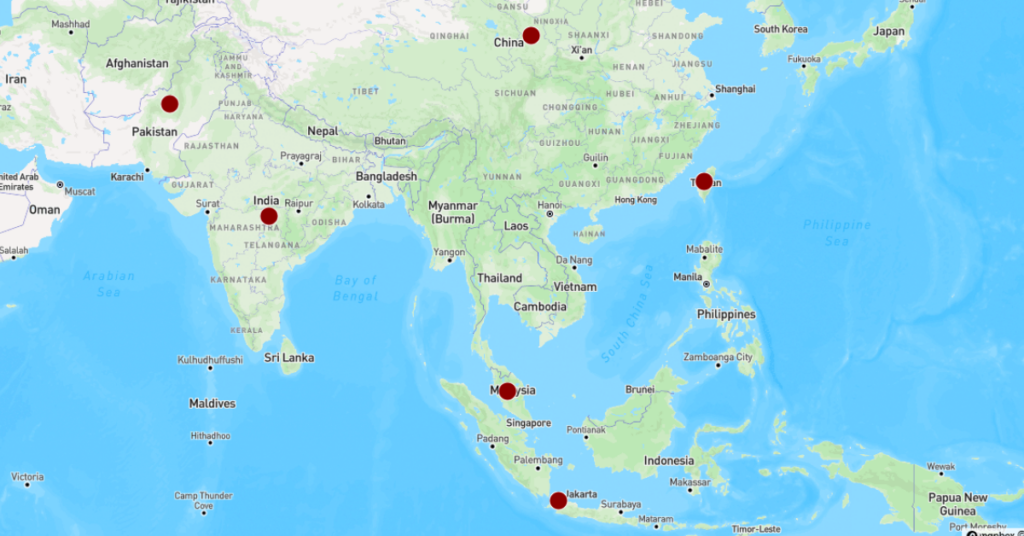
In this context, The Rights Practice and its network of prominent civil society organisations in Asia was created as a movement for regional knowledge-sharing on the effective defence of death penalty cases. The network brings together lawyers representing death penalty cases, organisations supporting the work of lawyers or as legal researchers on capital punishment in Asia, namely, The Square Circle Clinic (TSCC) in India, the Institute for Criminal Justice Reform (ICJR) in Indonesia, the Malaysian Centre for Constitutionalism and Human Rights (MCCHR) in Malaysia, Justice Project Pakistan (JPP) in Pakistan, the Taiwan Alliance to End the Death Penalty (TAEDP) in Taiwan, a legal NGO in China, and The Rights Practice (TRP) in the United Kingdom.
While legal systems across the region differ, the network found that death penalty cases often raise similar patterns and seek international precedents, creating clear opportunities for shared learning and collaboration, particularly for case lawyers. The partners identified the need for a meaningful, open-access platform to support an effective legal defence.
HURIDOCS supported The Rights Practice Network with the development of Death Penalty Defence-Asia, a Uwazi database designed to support defence lawyers representing individuals in death penalty cases by providing access to relevant, significant, and landmark cases, particularly for junior lawyers taking such cases for the first time. Legal practioners can look at how similar cases have been handled in other jurisdictions, as well as mitigation approaches, procedural steps, and more, to strengthen their defence arguments
“By showing what other lawyers have done, including examples of effective strategies as well as practices that have raised concerns, the database offers a practical reference point for understanding how to approach and prepare a death penalty defence.”
– The Rights Practice.
Standardised case briefs
The seven partner organisations of The Rights Practice Network and the HURIDOCS team worked through an extended, collaborative process to understand what information lawyers actually need when preparing a defence, and how that information should be structured to be useful across different legal systems.
At an early stage, the project was conceived primarily as a repository for reports and case-related information. However, as existing materials were often difficult and time-consuming to navigate, the network developed standardised case briefs, providing detailed insights into representative, significant or landmark death penalty cases from across the region.
To allow lawyers to quickly understand the case and ensure consistency across the jurisdictions, the network developed a shared structure and common terminology for the case briefs, while keeping the nuances of each legal system. The resulting data model and controlled list of terms were implemented in Uwazi to provide a flexible database system providing access to relevant, significant, or landmark case briefs from each jurisdiction.
The case briefs allow similarities to surface despite legal differences, where lawyers can easily identify and access defence strategies, examples of good and bad practice, and key human rights issues in capital cases across borders.
“This took time because we were working with six different partners, but that was essential to make sure everyone felt fully involved. As a fairly new network, the process of building this database with HURIDOCS and keeping everyone involved in the decision-making helped us strengthen our partnerships within the network.” – The Rights Practice
Following the initial phase, the HURIDOCS team worked with the network to develop a clear methodology defining the scope of data to be included in the database, with a focus on death penalty-specific cases and detailed defence strategies, rather than aggregate data. The team delivered step-by-step training sessions for all six partner organisations and The Rights Practice in a hybrid format, including an in-person workshop, to ensure consistent use of the platform.
Next steps
“We worked closely with the network to ensure the database would be sustainable and meaningful over time. That meant thinking about how partners would continue contributing over time, how the platform would transition into a public-facing resource, and how to balance usability with data confidentiality and partner security.”
– Phurbu Dolmba, HURIDOCS Programme Officer.
The partners in each country continue to feed the database with information and cases that are relevant and that have the consent of the people concerned. While they are individually sharing it within their local contexts with junior lawyers, the network plans to share this database with the international community in June at the 9th World Congress Against the Death Penalty in Paris.