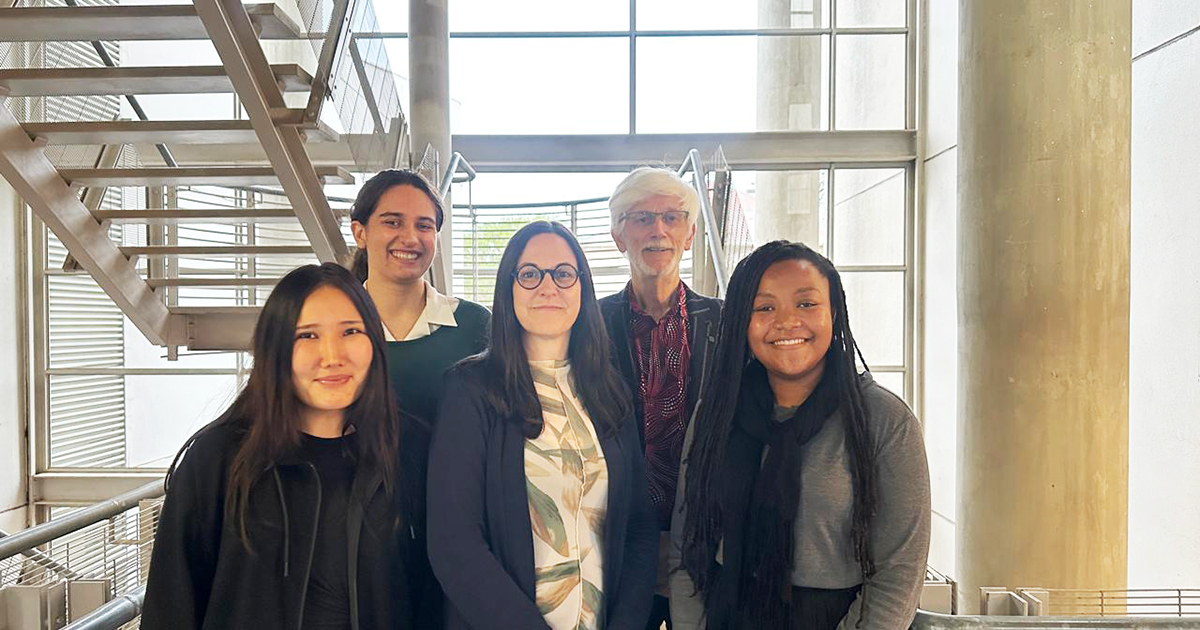
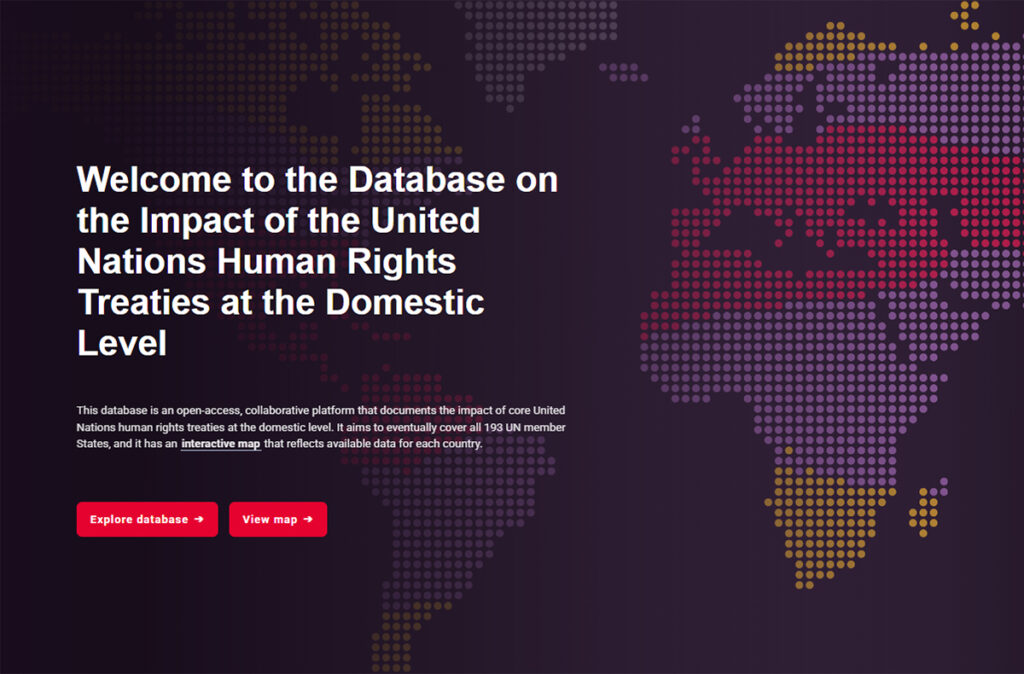
On 22 April 2026, the Centre for Human Rights, University of Pretoria, hosted the academic launch of the ‘Database on the Impact of the United Nations Human Rights Treaties at the Domestic Level’. The database, powered by Uwazi, was developed with the collaboration and support of HURIDOCS.
The Centre is one of HURIDOCS’ first partners to test and use Uwazi, when they launched the database and commentary on jurisprudence of the African Court on Human and Peoples’ Rights in 2017. This new database on the UN treaty system is the coming together of the two organisations after almost 10 years.
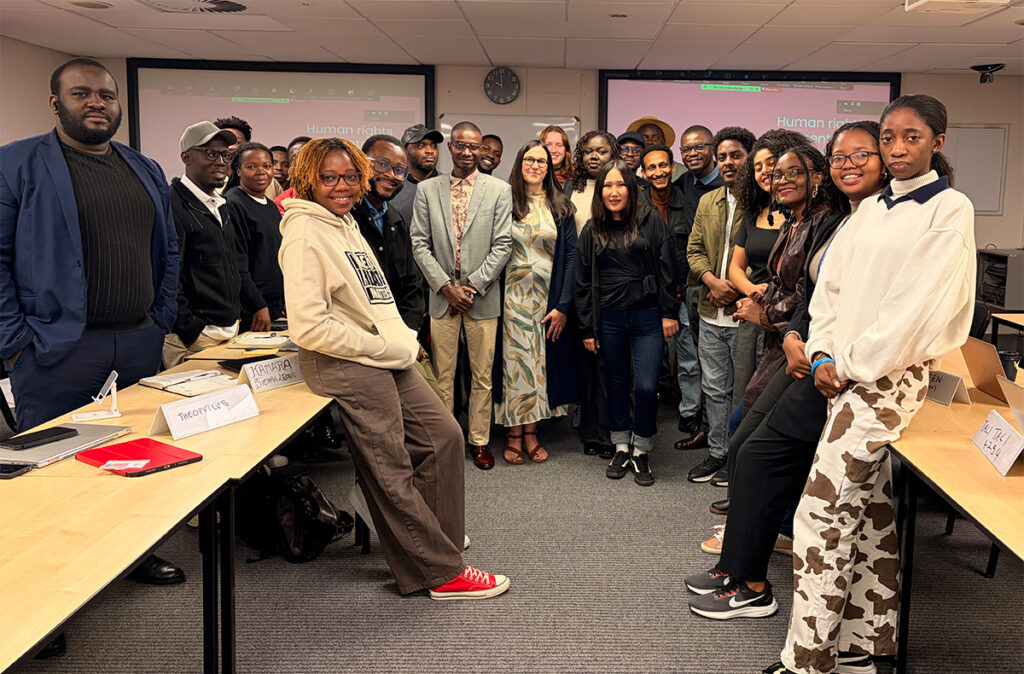
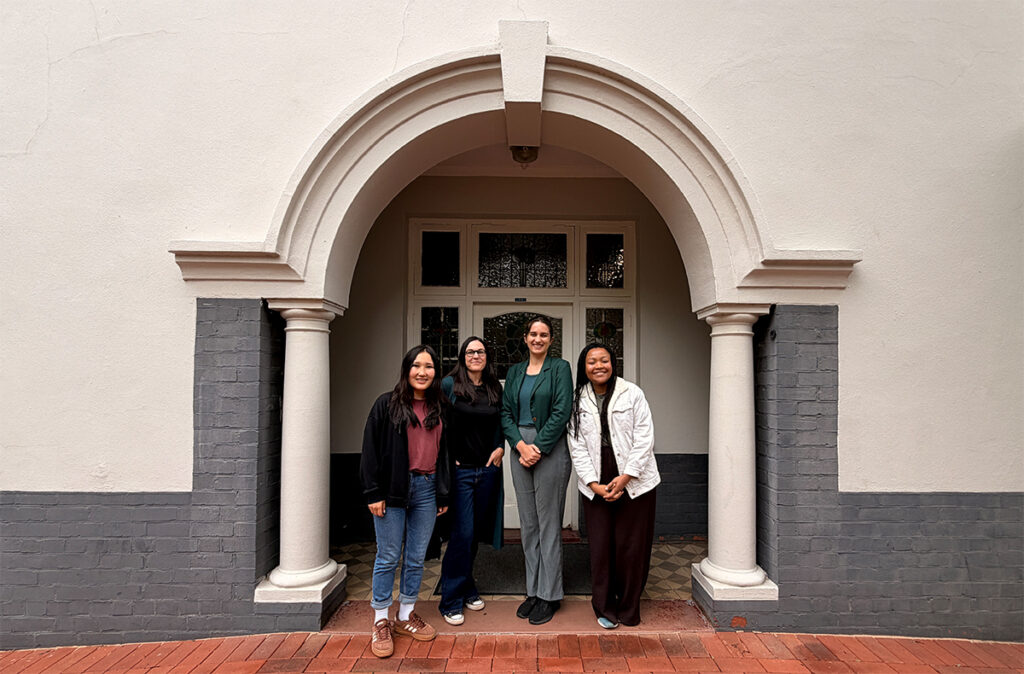
The launch event formed part of the annual short course on the African Human Rights System in Comparative Perspectives, where HURIDOCS team members Arina Serebrennikova and Yolanda Booyzen presented on human rights documentation and databases. The academic launch was attended by more than 100 delegates, including course participants, students, practitioners and researchers. Speakers included Prof Ebenezer Durojaye, Prof Frans Viljoen, Danna Ingleton, Yolanda Booyzen, Ruth Versfeld, Ntokozo Sibanyoni, and Prof Nkatha Murungi.
About the database
This database is the result of two publications that track the impact of the UN treaty system over 20 years:
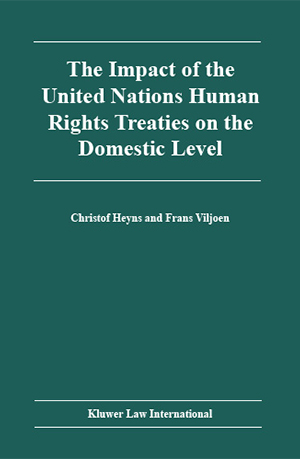
The Impact of the United Nations
Human Rights Treaties on the Domestic Level
Christof Heyns and Frans Viljoen
(Kluwer Law International, 2002)
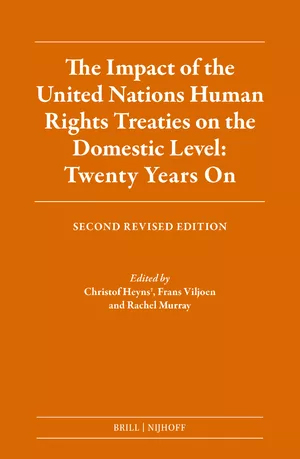
The Impact of the United Nations Human Rights Treaties on the Domestic Level: Twenty Years On
Christof Heyns, Frans Viljoen and Rachel Murray
(Brill, 2024)
Prof Christof Heyns, a former United Nations Special Rapporteur on extrajudicial, summary or arbitrary executions and Member of the United Nations Human Rights Committee, co-authored the publications and was the driving force to build a database containing extensive documentation and research on the domestic impact in all UN member states, before his untimely death in 2021.
“The Centre for Human Rights sincerely thanks the late Professor Christof Heyns, former Director of the Centre, for his vision for a database that tracks the impact of the UN Human Rights Frameworks globally. The Centre hopes that this project will remain a long lasting legacy of Professor Heyns, bequeathed to us, to his family, and to all beneficiaries of human rights frameworks.”
– Prof Frans Viljoen, Centre for Human Rights
The goal of the academic launch of this database was to showcase the collection of documentation and research dealing with South Africa as a first case study and to call for more contributions to build and expand on the project.
The database focuses on the influence of the nine core UN human rights treaties on domestic legal frameworks and practices, as reflected in national constitutions, legislation, policies, judicial decisions, government reports, documents of independent government institutions (such as national human rights institutions); and as spotlighted by the work of academics and researchers, media outlets, political manifestos, and other public information.
Each entry is verified, coded, and categorised by country, treaty body, theme, and impact level. The resulting database enables both qualitative and quantitative analysis through interactive visualisations and access to source documents.
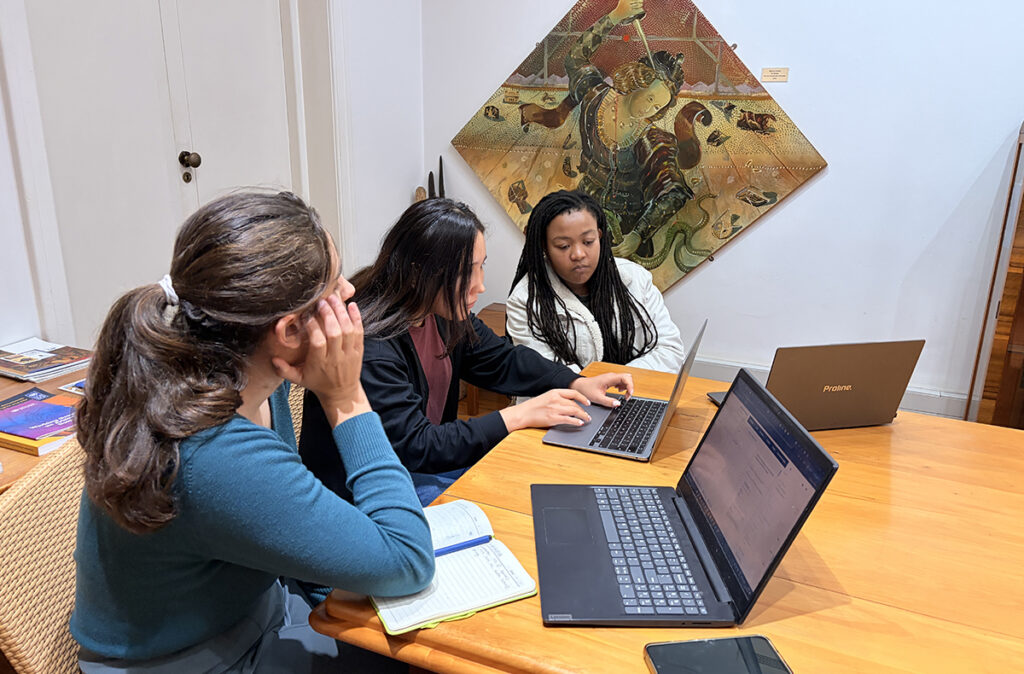
“Prof Heyns foresaw that this database could grow exponentially and potentially become a repository of approximately 77,000 entries. I feel confident that we have created a tool that will allow the Centre to reach that number, and go beyond it if they wish. I feel very lucky to have witnessed this moment and to be part of such a meaningful milestone for HURIDOCS and the Centre for Human Rights, and very grateful to have spent this beautiful week in Pretoria.”
– Arina Serebrennikova, HURIDOCS
Aim of the database
The database is designed as a comprehensive, accessible repository of materials that demonstrate the tangible impact of specific UN human rights treaties in the domestic context of the UN member states. By systematically collecting and systematising this information, the project aims to deepen understanding of treaty body influence, support comparative research, and strengthen accountability and advocacy efforts worldwide.
It aims to:
- Provide researchers with raw data on which they can conduct their analyses of the domestic impact of UN human rights treaties
- Break down the data to enable users to optimally search for information through filtering
- Provide a starting point for domestic impact research
- Raise awareness on the impact of the UN human rights treaty body system
In short, the database serves as a reference tool to help researchers to readily access the data they need, and aims to promote enhanced scholarship on the topic of domestic impact. It is envisaged that the database will be publicly launched by the end of 2026.
“This database is crucial for mapping and building a clearer picture of the impact of the UN treaty system across the globe. It underscores both the value of collaboration and highlights the role of information as an integral foundation for advocacy, improved state reporting, strengthened accountability, and more context-sensitive engagement with human rights norms.”
– Ruth Versfeld and Ntokozo Sibanyoni, Centre for Human Rights
Call for contributors
The Centre for Human Rights is calling on researchers to contribute to the database to ensure that all UN member states are researched and mapped in the database. To contribute to the database, please submit your documentation and findings by using this form.
The database was realised through the support of the HURIDOCS Documentation Fund, with the generous contribution of the Irene M. Staehelin Foundation.
HURIDOCS would like to thank the database team for their commitment throughout the project: Prof Frans Viljoen, Brian Kibirango, Ruth Versfeld, Ntokozo Sibanyoni. Special thanks to Foluso Adegalu, who is no longer at the Centre but played a crucial role throughout.
Speech delivered by Yolanda Booyzen, HURIDOCS’ Director of Development and Communications, at the launch of the ‘Database on the Impact of the United Nations Human Rights Treaties at the Domestic Level’:
Dear colleagues, friends and students,
It is such a privilege to be back at the Centre for Human Rights, University of Pretoria and to be part of this academic launch of the database on the impact of the UN human rights treaties at the domestic level.
As some of you may know, I called the Centre my home for more than 16 years, where I was part of a vibrant and passionate team working tirelessly to promote human rights on the African continent. We were led for almost thirty years by two giants of the human rights world: Prof Christof Heyns and Prof Frans Viljoen, respectively.
During these three decades, the two publications that form the backbone for this database were published, first in 2002 and then in 2024. Sadly in 2021, Prof Heyns suddenly and unexpectedly passed away and left a huge gap in both the academic and the human rights world. Two worlds which he brought together through many notable projects: the African Human Rights Moot Court Competition, now called the Christof Heyns Moot Court, the prestigious Master’s programme in Human Rights and Democratisation in Africa, the Nelson Mandela World Human Rights Moot Court competition, the Law Faculty Festival, the Pretoria University Law Press, the Pulp Fictions dialogue series, Southern Africa Student Volunteer Organisation (SASVO), his work on autonomous weapon systems, and so much more at the United Nations during his role as Special Rapporteur and Member of the Human Rights Committee.
One project Christof always spoke about was the Impact Database 2020+. I would often help him with creating communications materials and putting together powerpoints to raise awareness about this incredible research work, and the corresponding database that would follow.
Christof often reached out to try and find ways to sensibly organise and present such a large dataset, which would grow over the years, and would touch upon every UN member state. Christof often described how the regions, the countries, the treaties and the impact targets would result in a complex system that has 1930 tables and a total of approximately 77 000 entries.
After Christof passed away, I joined the Geneva-based NGO HURIDOCS which stands for Human Rights Documentation and Information Systems. HURIDOCS develops strategies and tools to facilitate human rights monitoring and documentation work and improve access to bodies of human rights information. Currently, our database tool Uwazi is being used by more than 300 human rights organisations to manage human rights data in more than 400 databases.
After joining HURIDOCS I often thought about the Impact Database 2020+ that never was – and decided that I will make it my mission to ensure that the research on the impact of the UN human rights treaty system will find its way into a searchable, flexible, secure and robust information system.
In 2023, HURIDOCS facilitated a number of discovery workshops for the Centre to learn more about the database, its objective, its structure, its content, its users and its own potential impact. The project was envisioned to advance to its next phase, but as with any complex information system, the resources had to be in place to proceed to the implementation phase.
This is a common challenge we experience with our partners, and the reason behind the establishment of the HURIDOCS Documentation Fund. This fund was created so that civil society groups and human rights defenders can access pro bono or subsidised work with HURIDOCS to conduct thorough documentation and to systematise this critically important data securely and efficiently. In 2024, the Irene M. Staehelin Foundation generously donated to the Documentation Fund to support 9 partner organisations in Africa with their documentation initiatives.
This support enabled HURIDOCS to go back to the Centre and share that we will be able to support the technical implementation of the database pro bono. The Centre is an outstanding partner, and demonstrated enthusiasm, commitment and dedicated research staff to this project. What makes this partnership even more significant is that the Centre for Human Rights was one of the first HURIDOCS partners to test and use Uwazi, and built a database and commentary on jurisprudence of the African Court on Human and Peoples’ Rights, almost ten years ago.
It is such an honour to stand here today and to see how the relationship between HURIDOCS and the Centre, and this incredible collaboration, have solidified and come full circle.
Christof was a passionate believer in the role that moot courts play in renewing people’s faith in and commitment to the idea of human rights. He often quipped about the idea of saving the world through moot courts. Today I want to update that notion and also state that we can make a positive impact on the world through databases. This project has the potential to enable civil society and the broader public to engage with the UN human rights treaties and to see how these mechanisms, often perceived as abstract, actually have tangible and traceable impact on the human rights project as a whole.
I would like to take this opportunity to thank Prof Frans Viljoen, for his immense dedication to this project and for providing his insights, guidance, and wisdom to the project. Thank you Frans! I would also like to offer sincere thanks to the talented team from the Centre: Brian Kibirango, Ntokozo Sibanyoni, and Ruth Versfeld. Thank you for your brilliant work! I would also like to express thanks to Simphiwe Khumalo, Carole Viljoen and Magnus Killander for their support during our engagements this week.
And lastly, before I hand it over to Ntokozo and Ruth, let me highlight the wonderful work of my colleague Arina Serebrennikova. Thank you Arina for making the Impact Database 2020+ dream a tangible reality. I know Prof Heyns would have been very pleased and proud to see the database being realised today. Thank you.