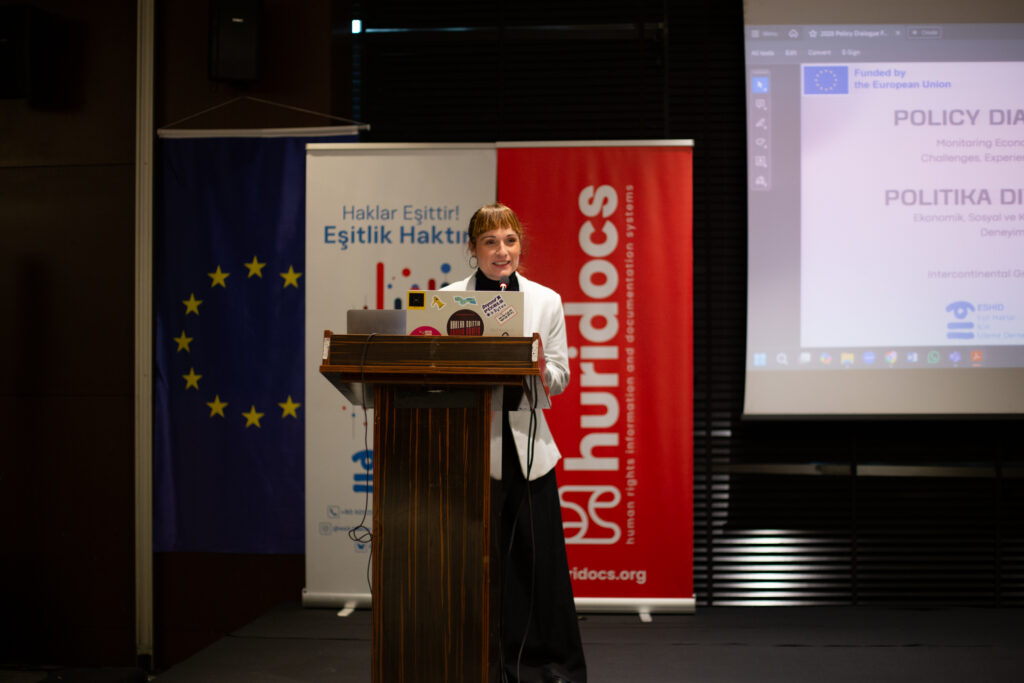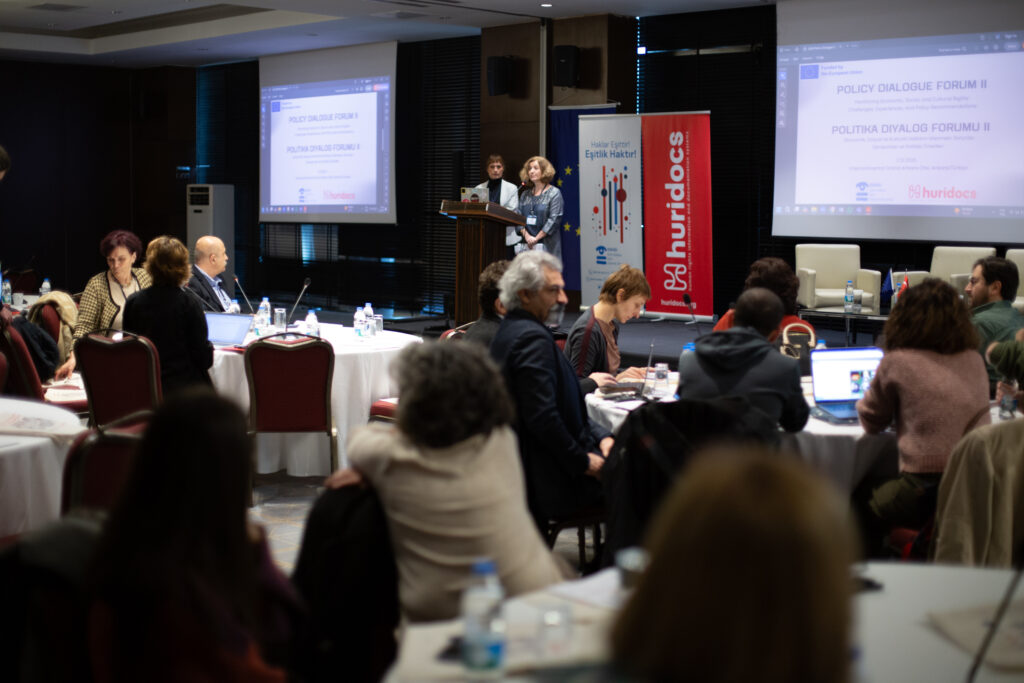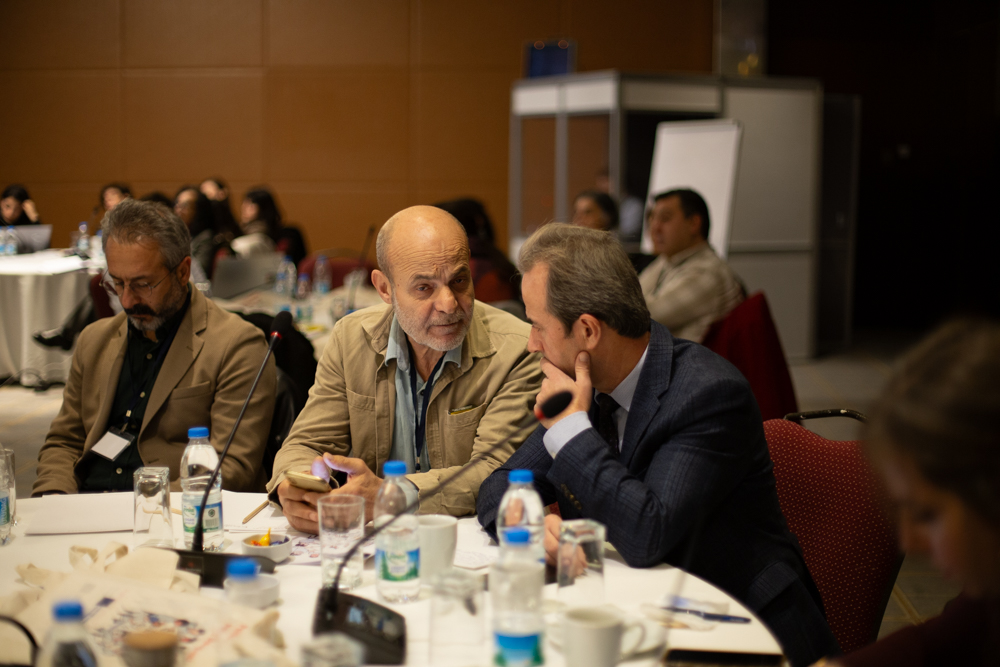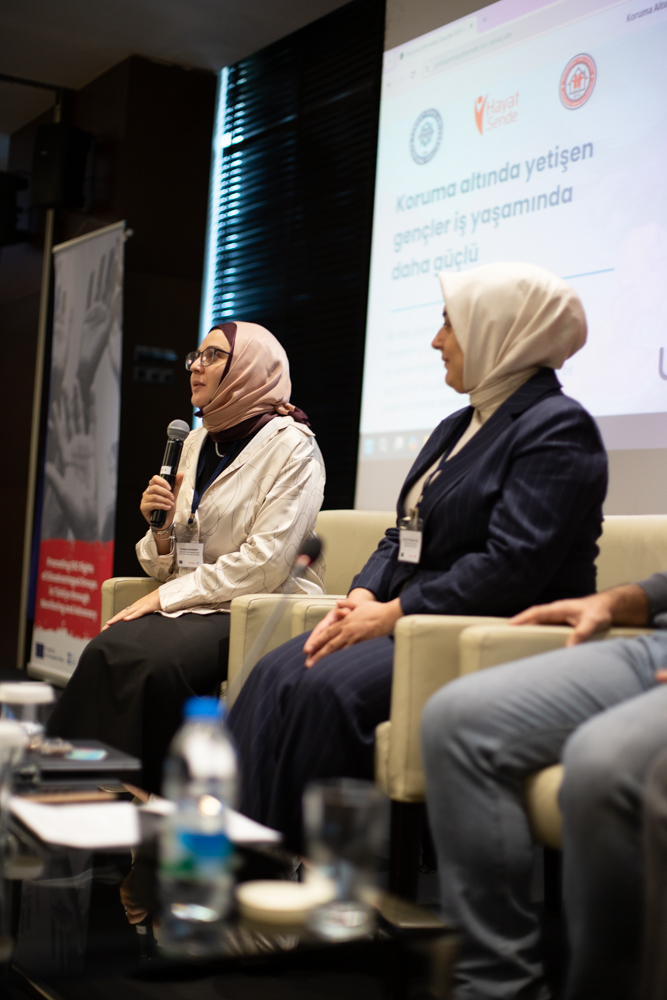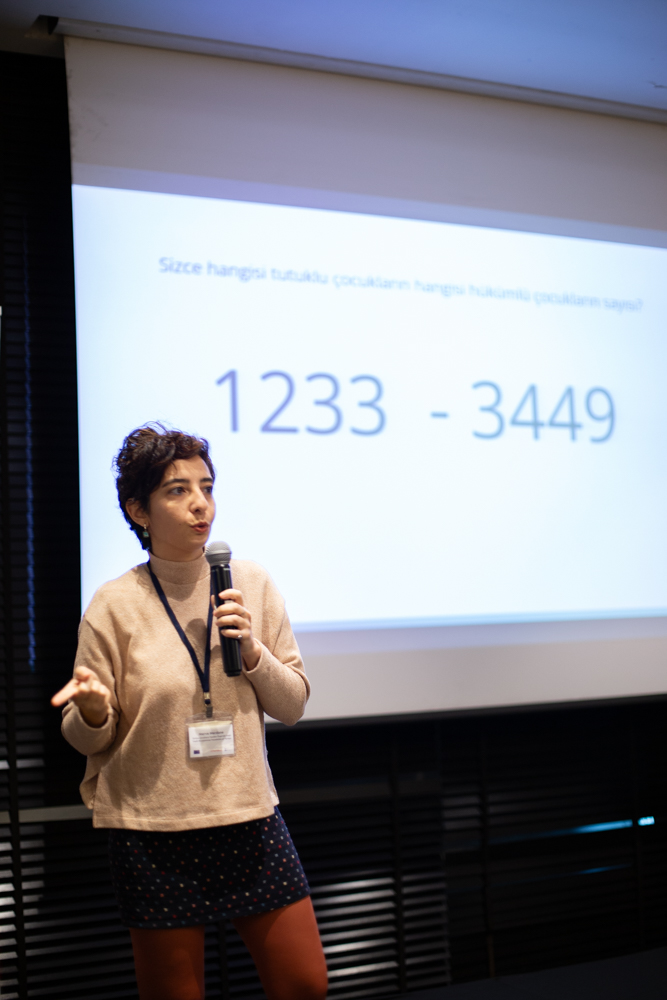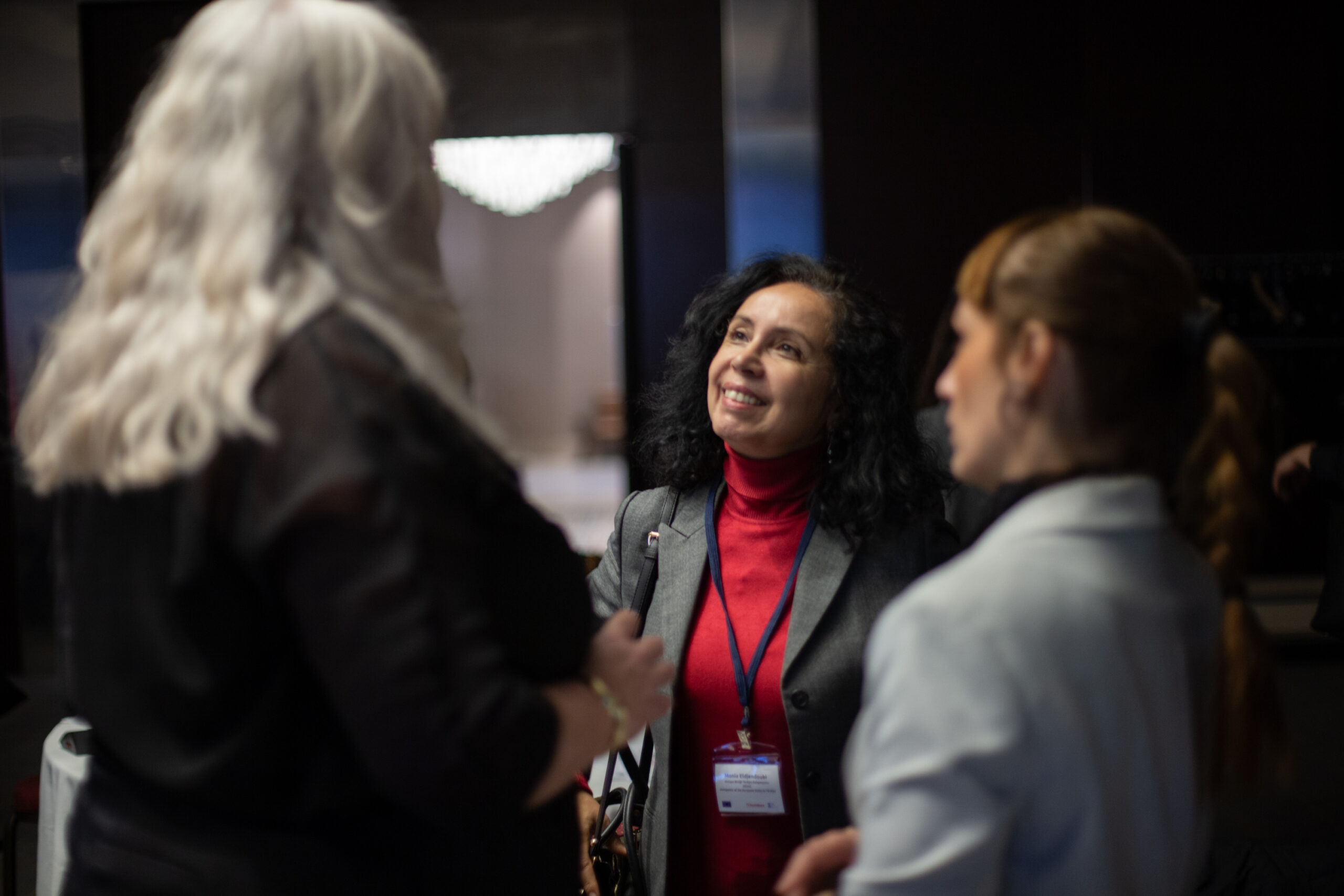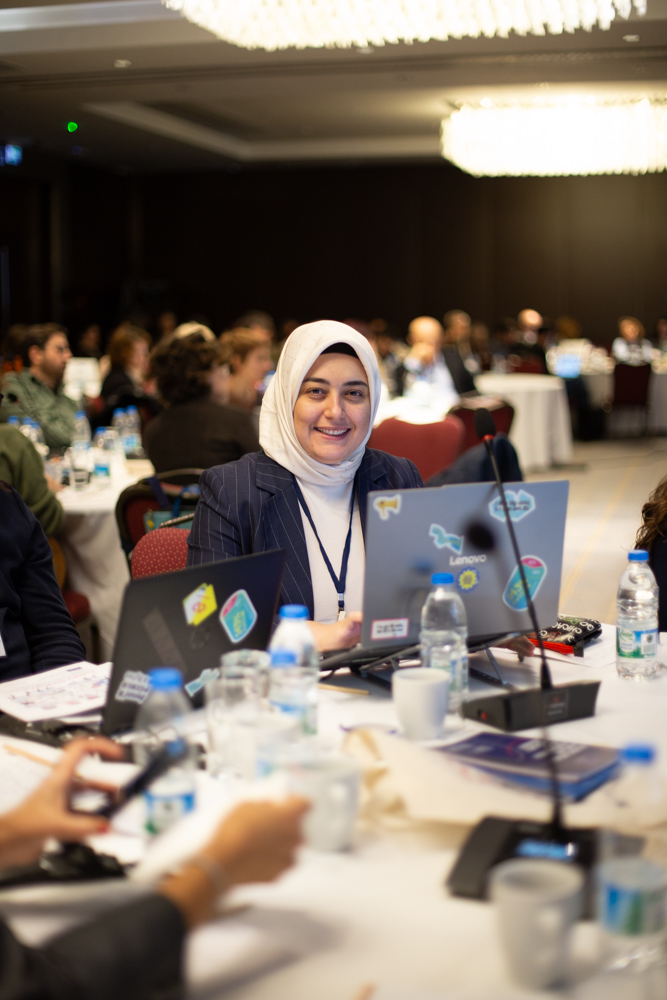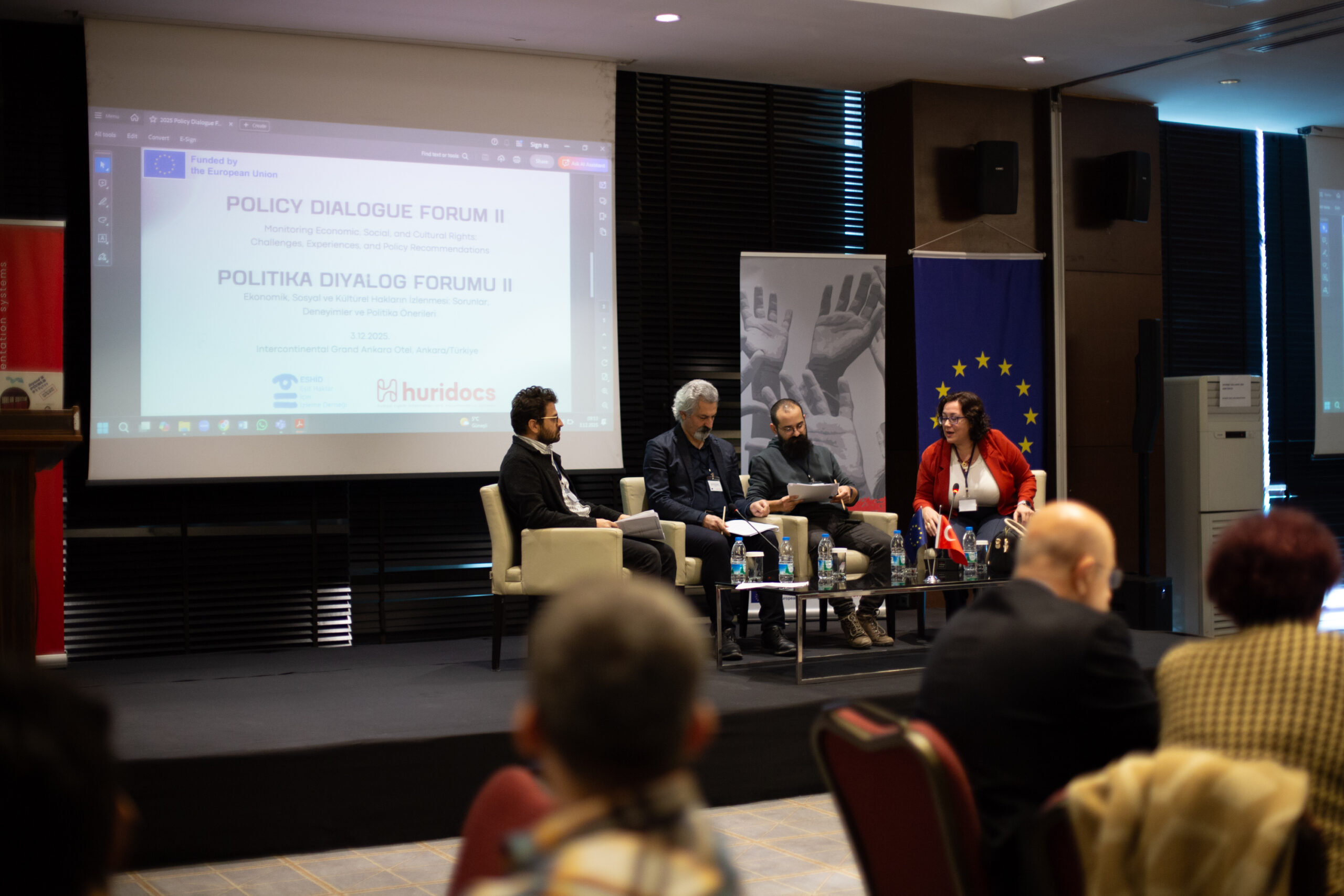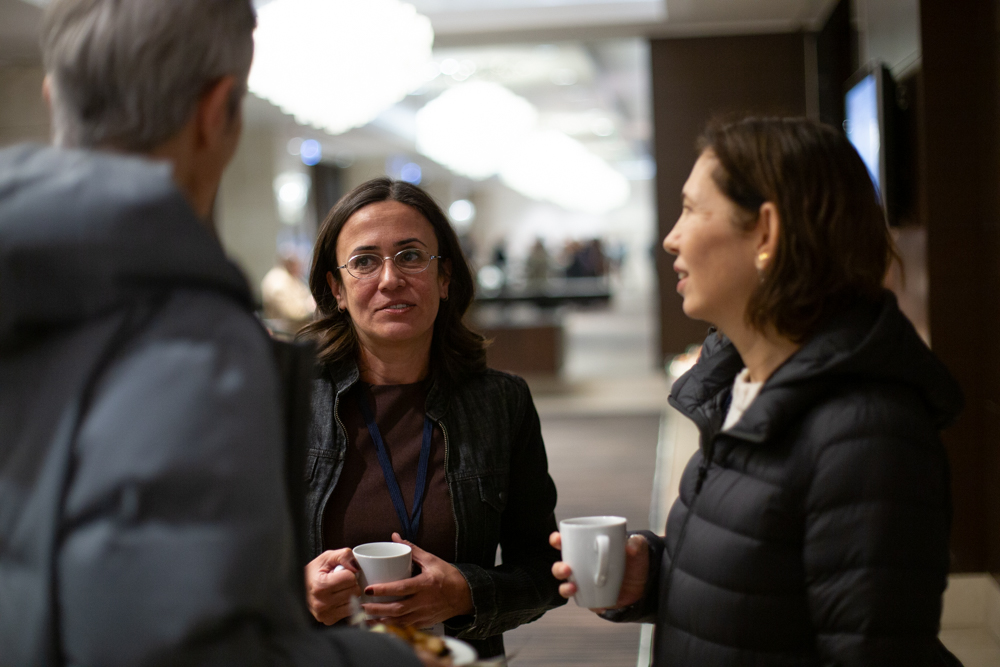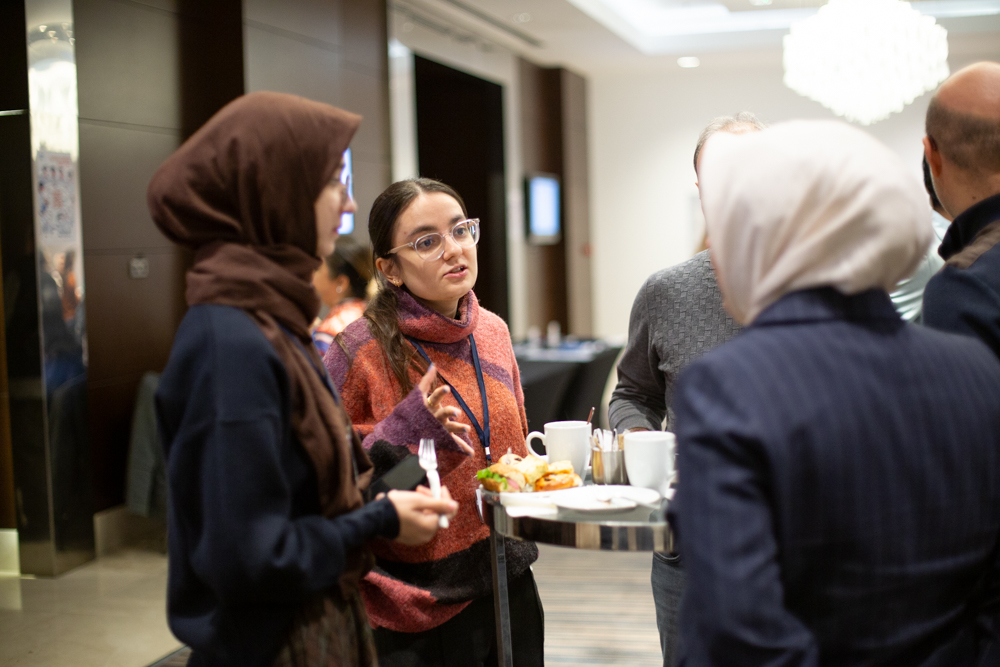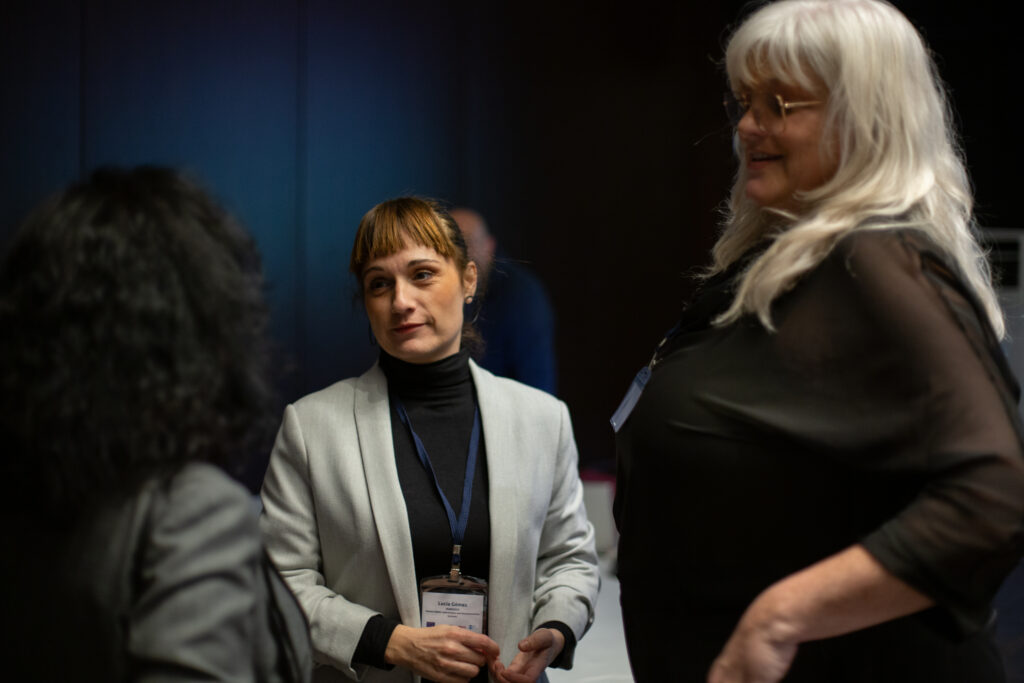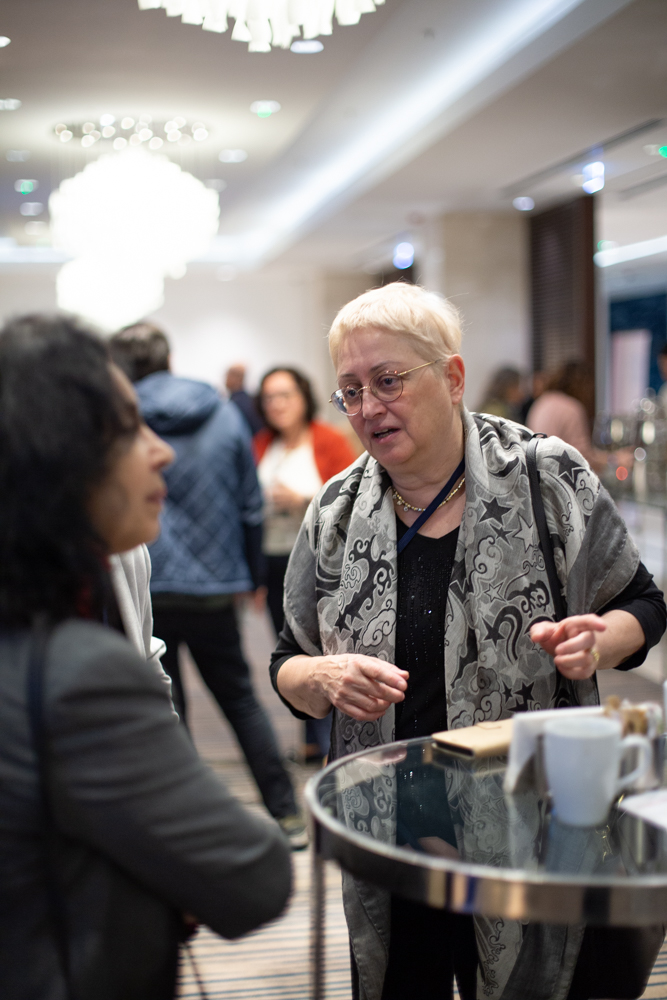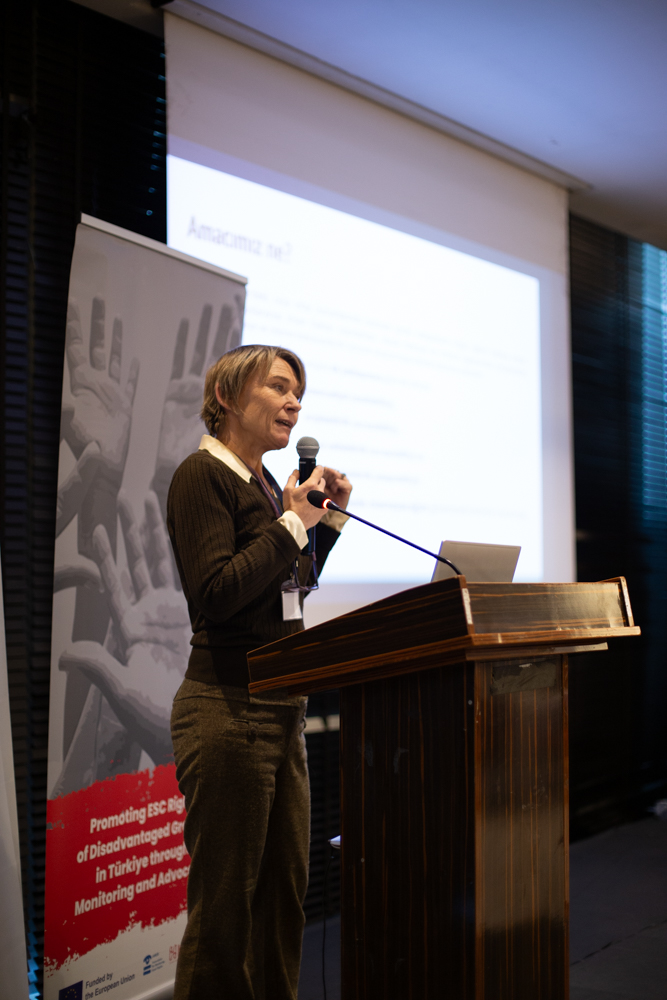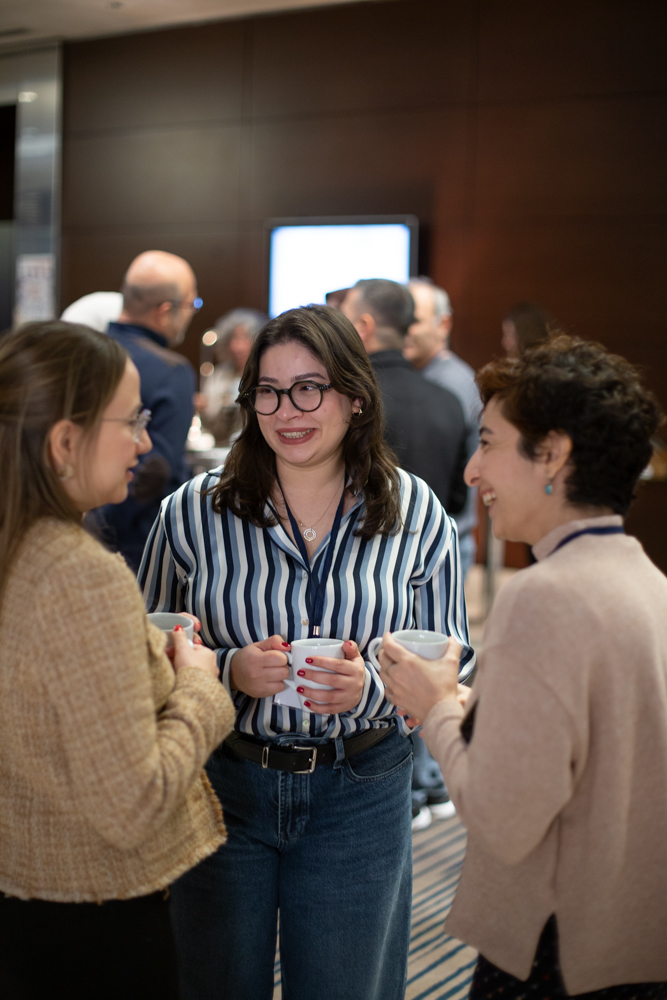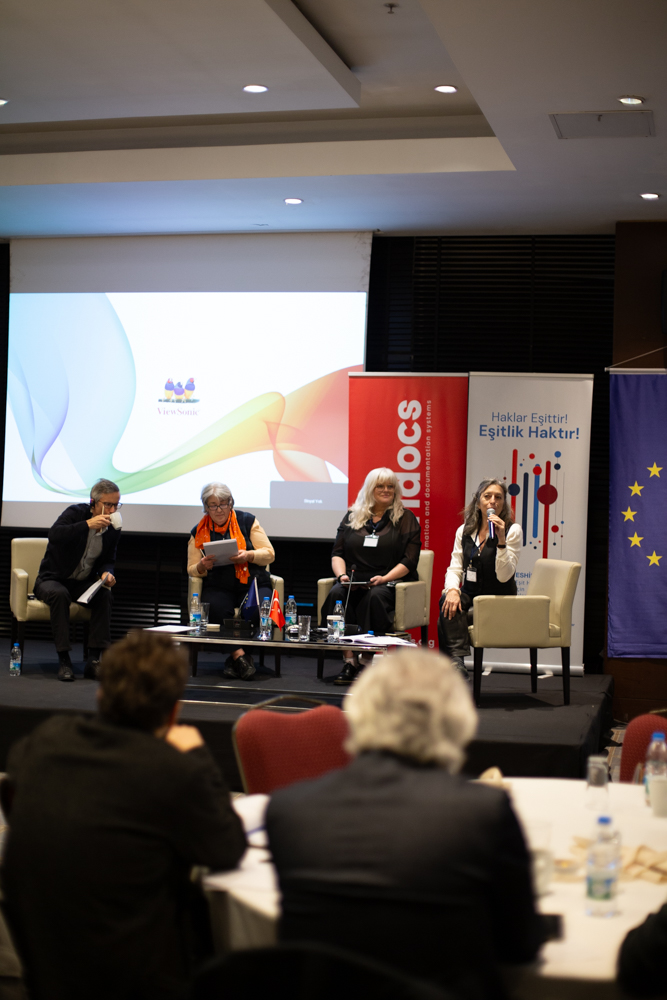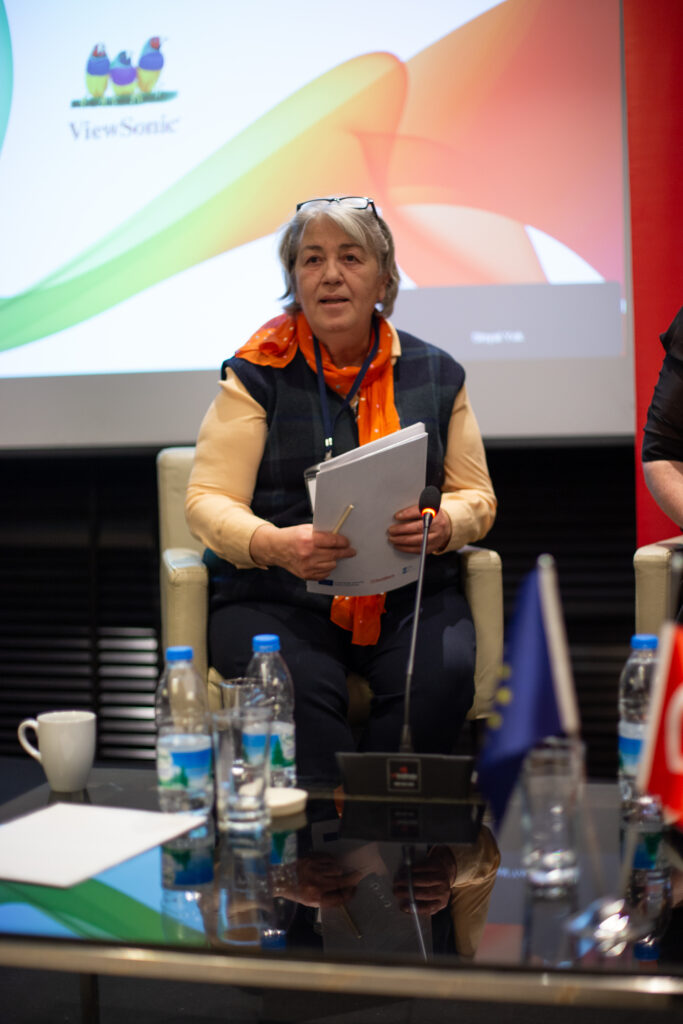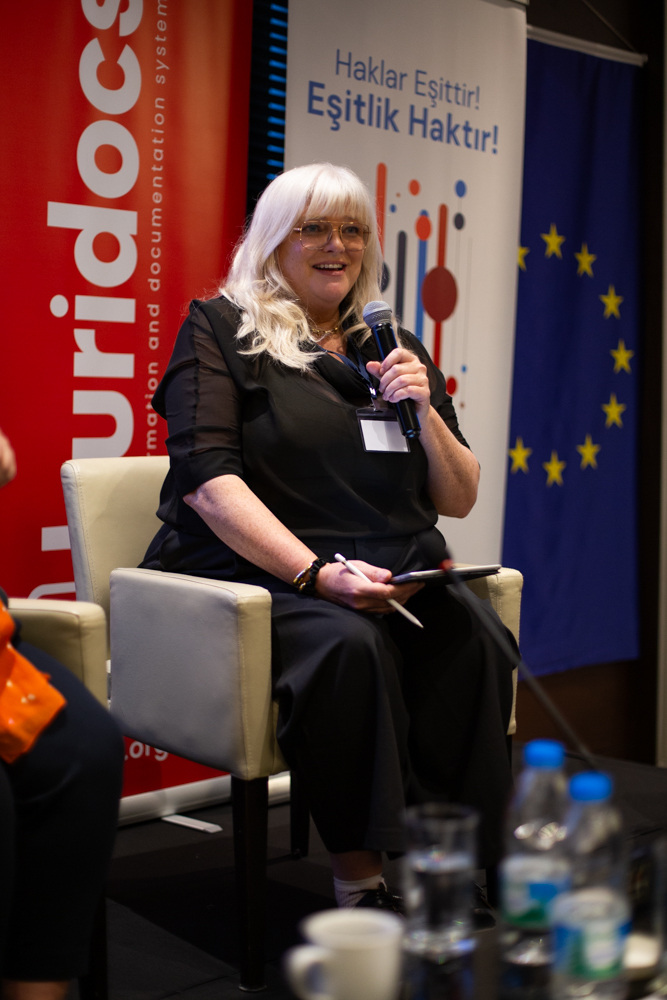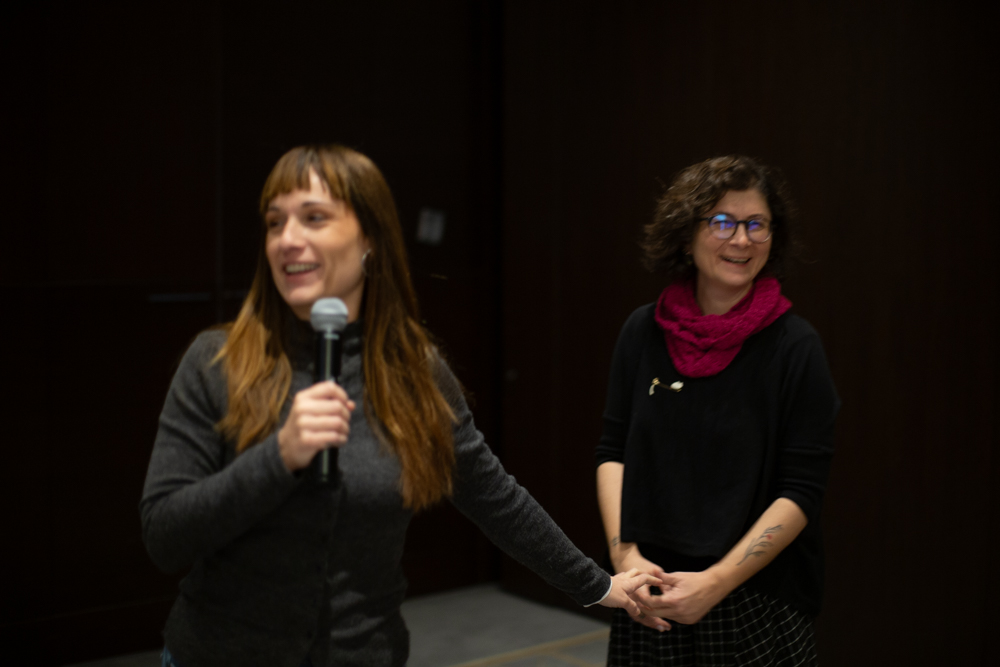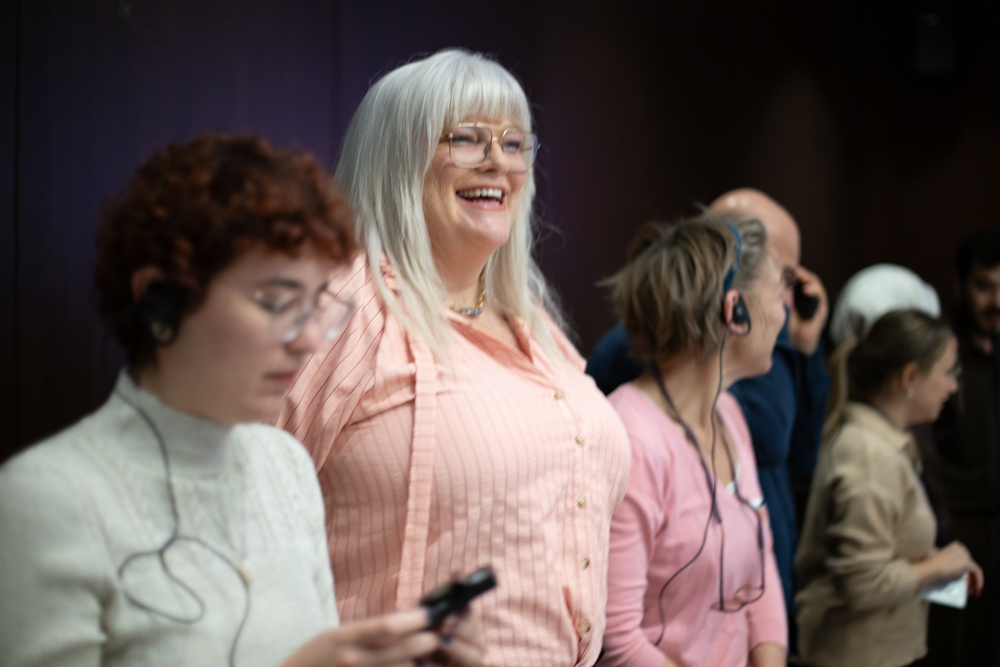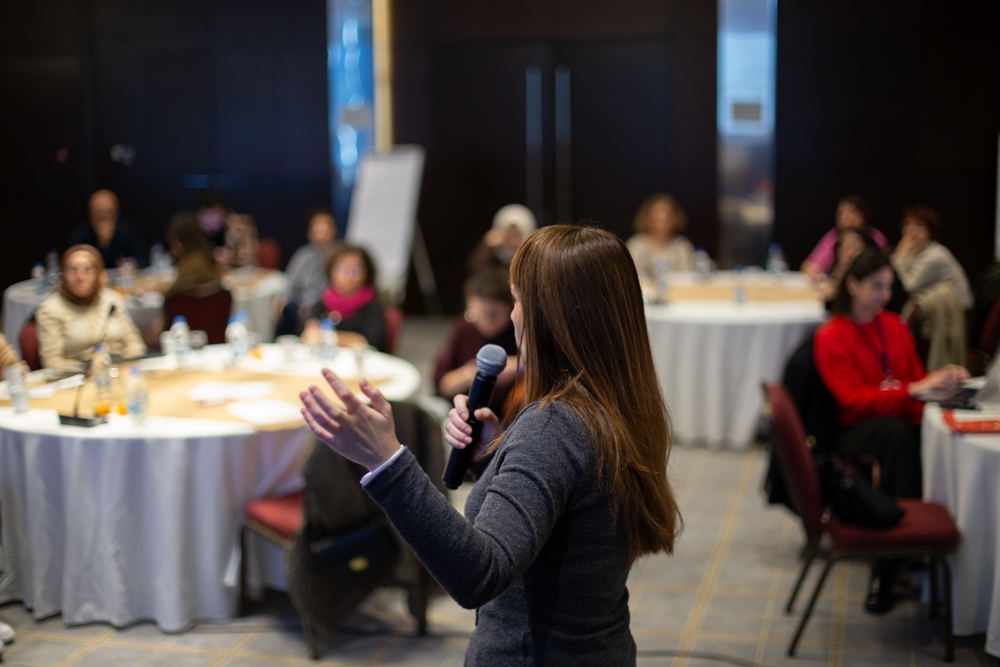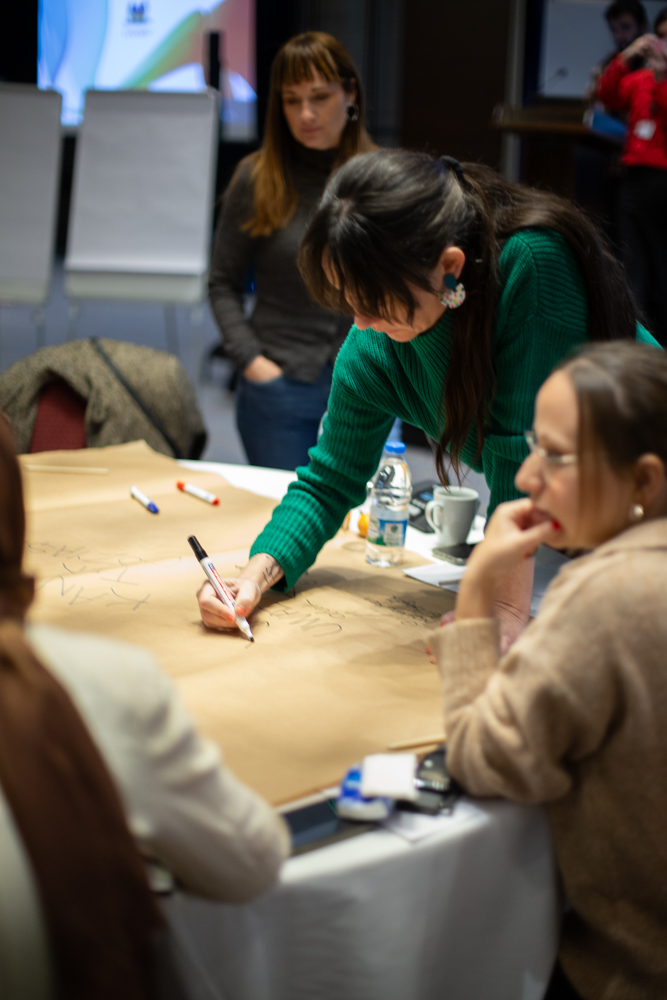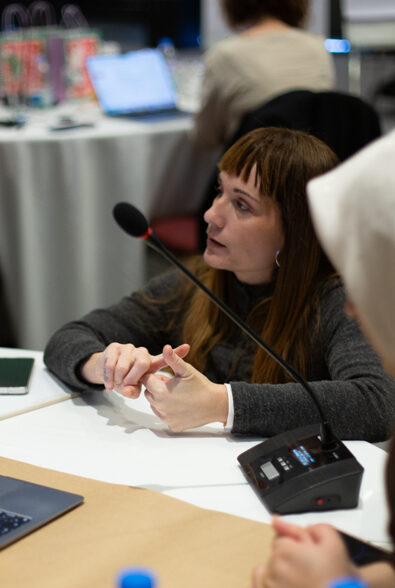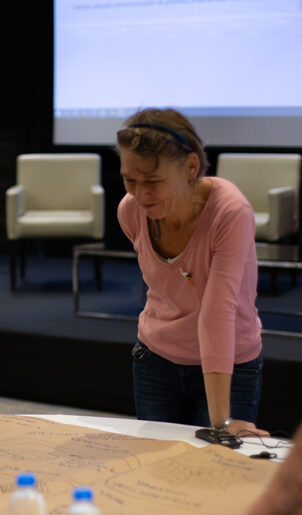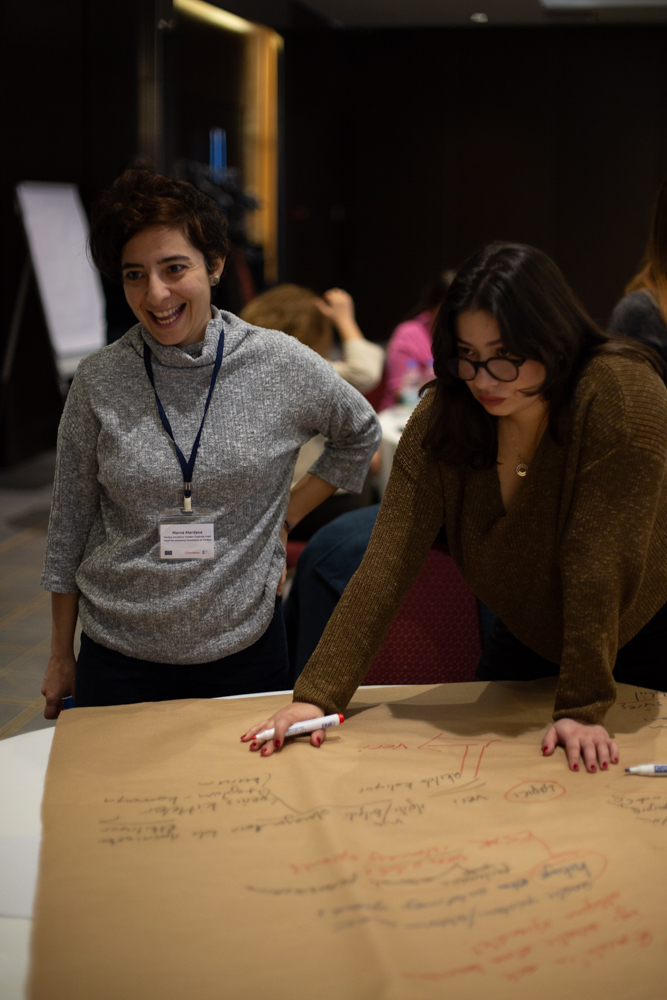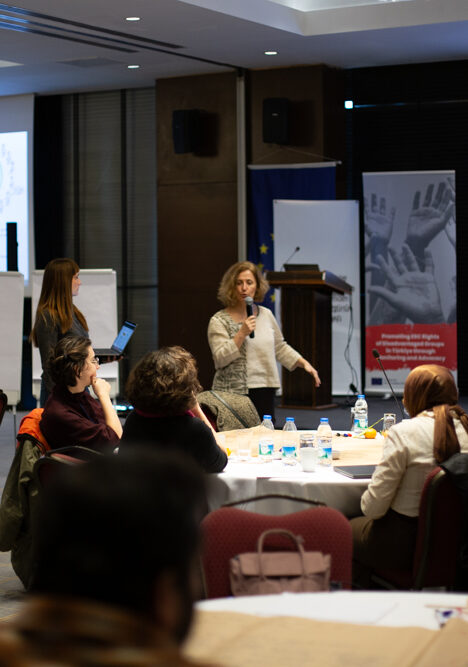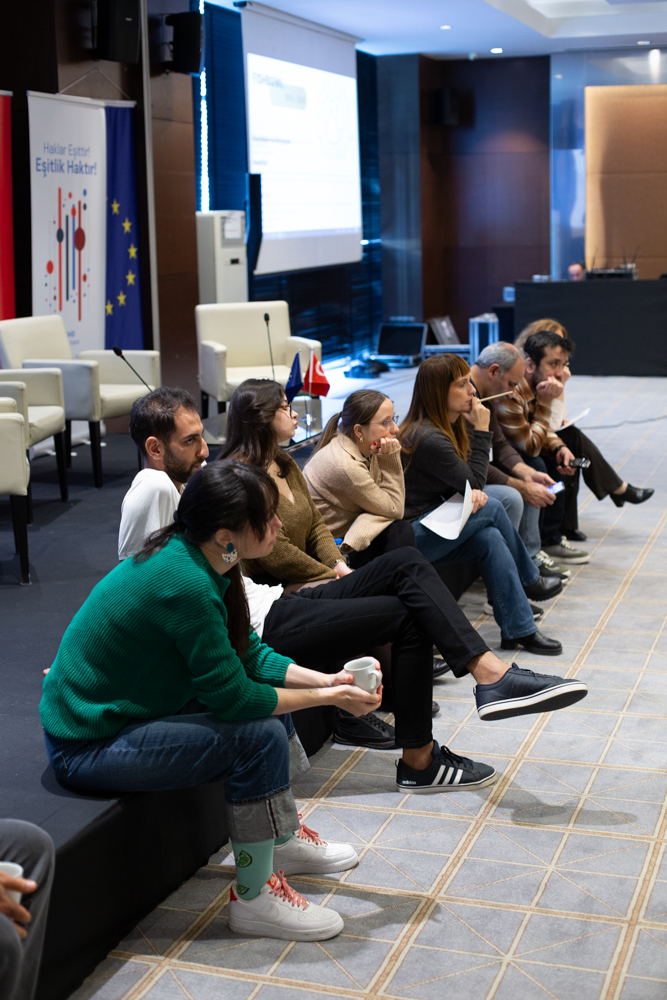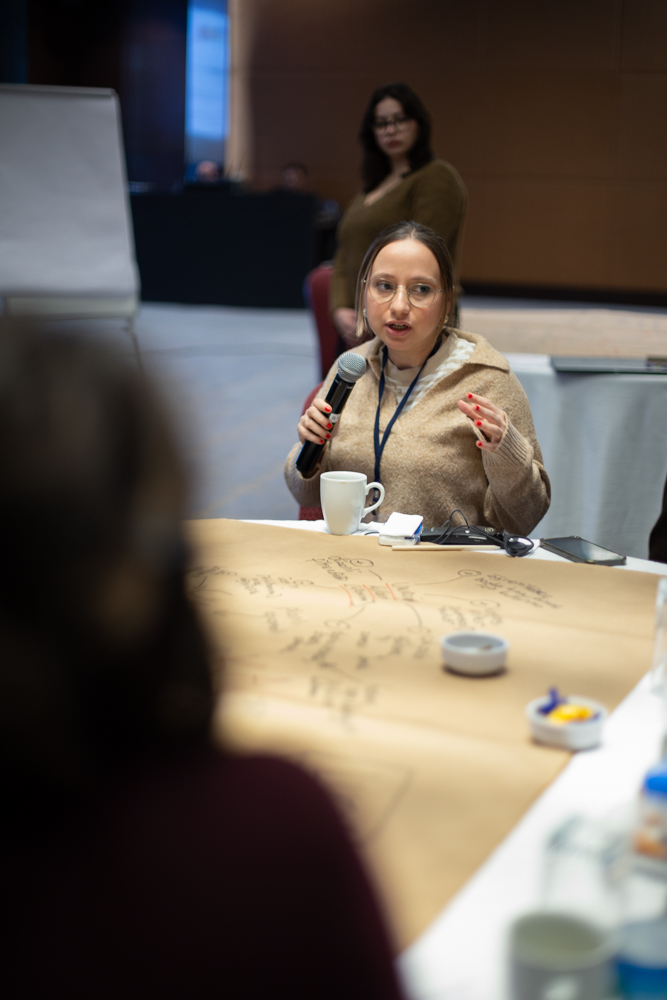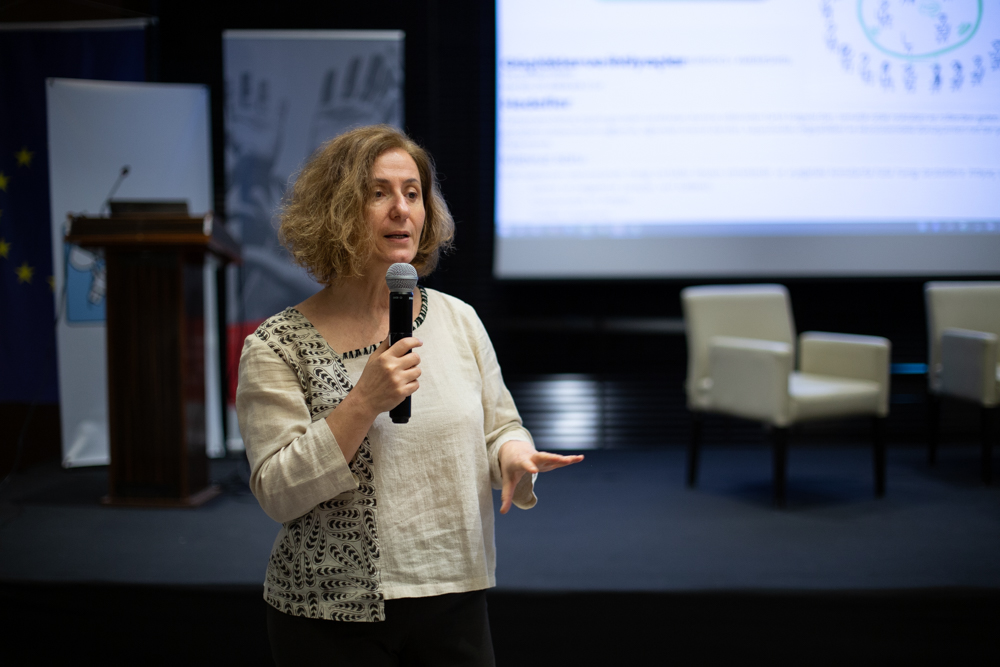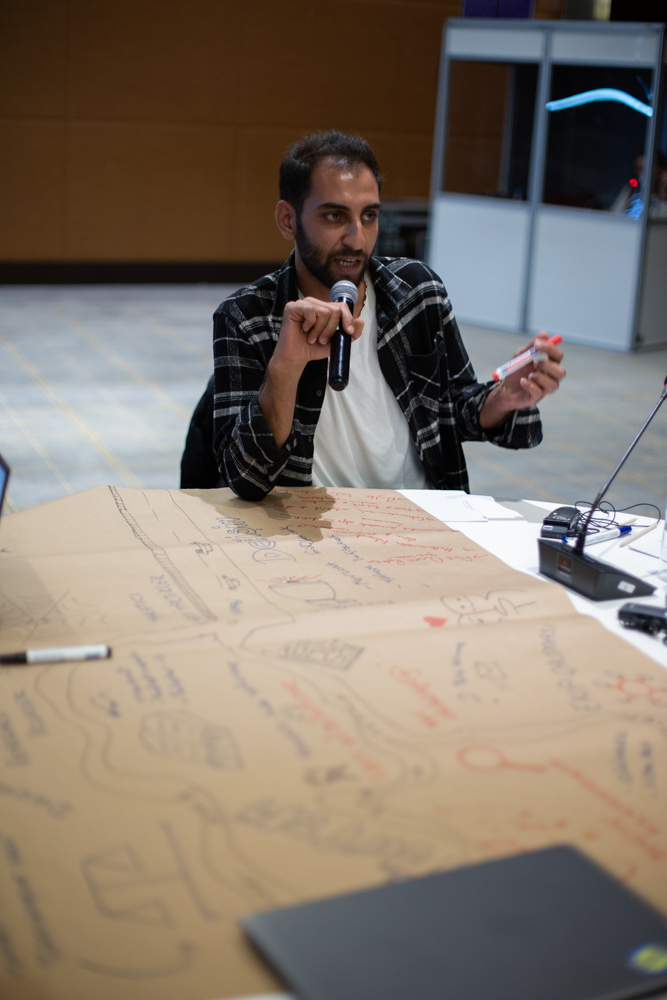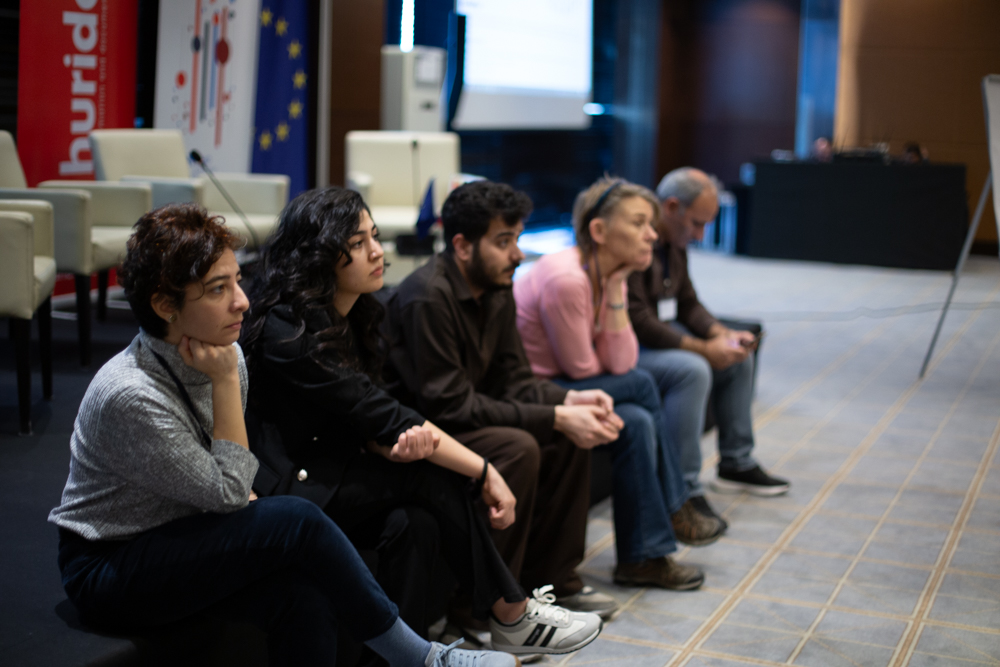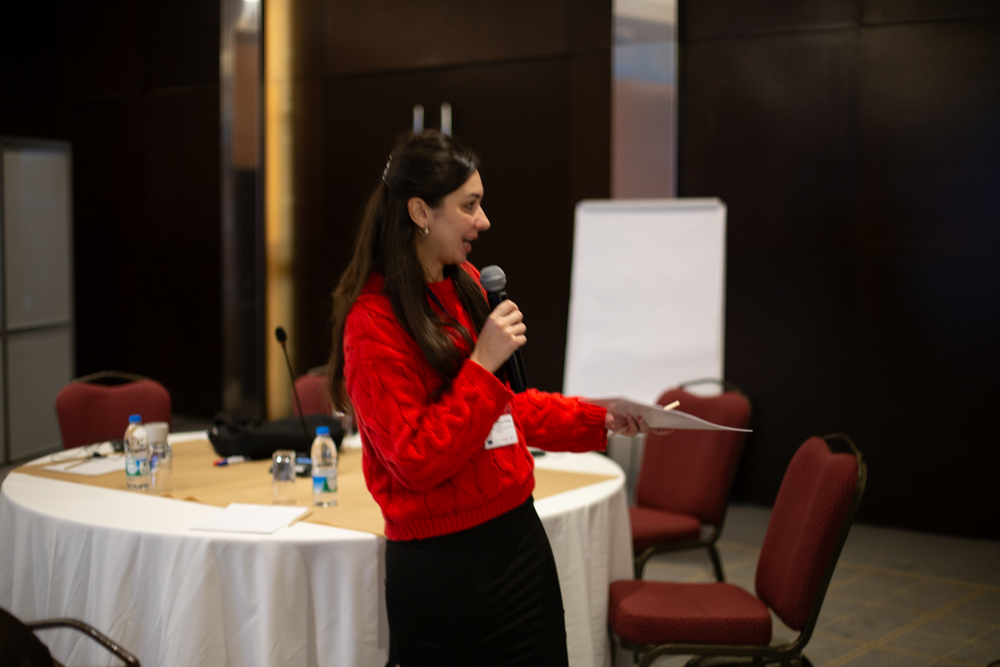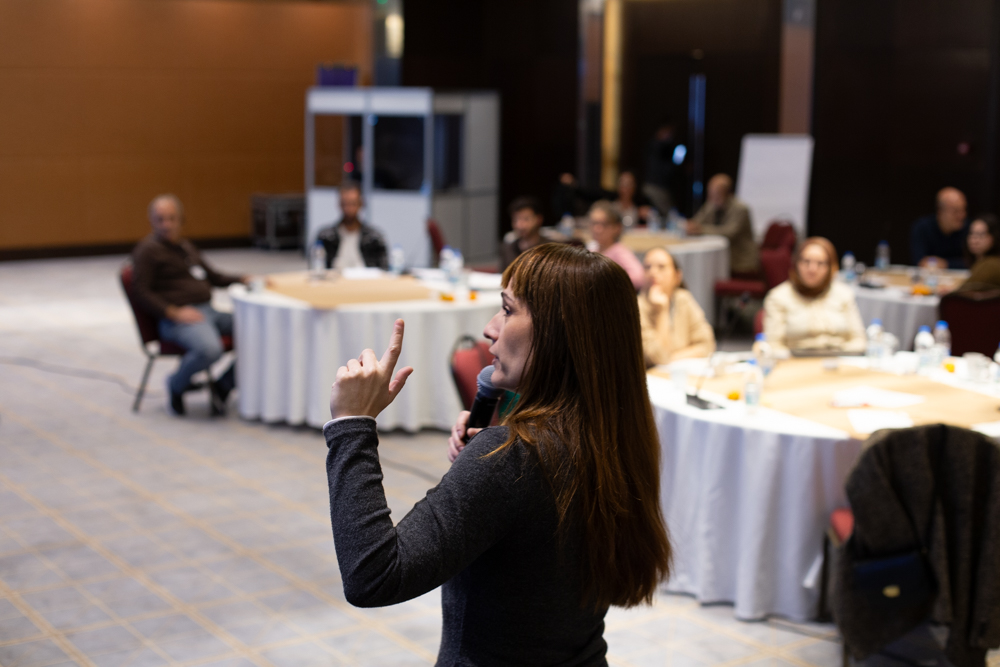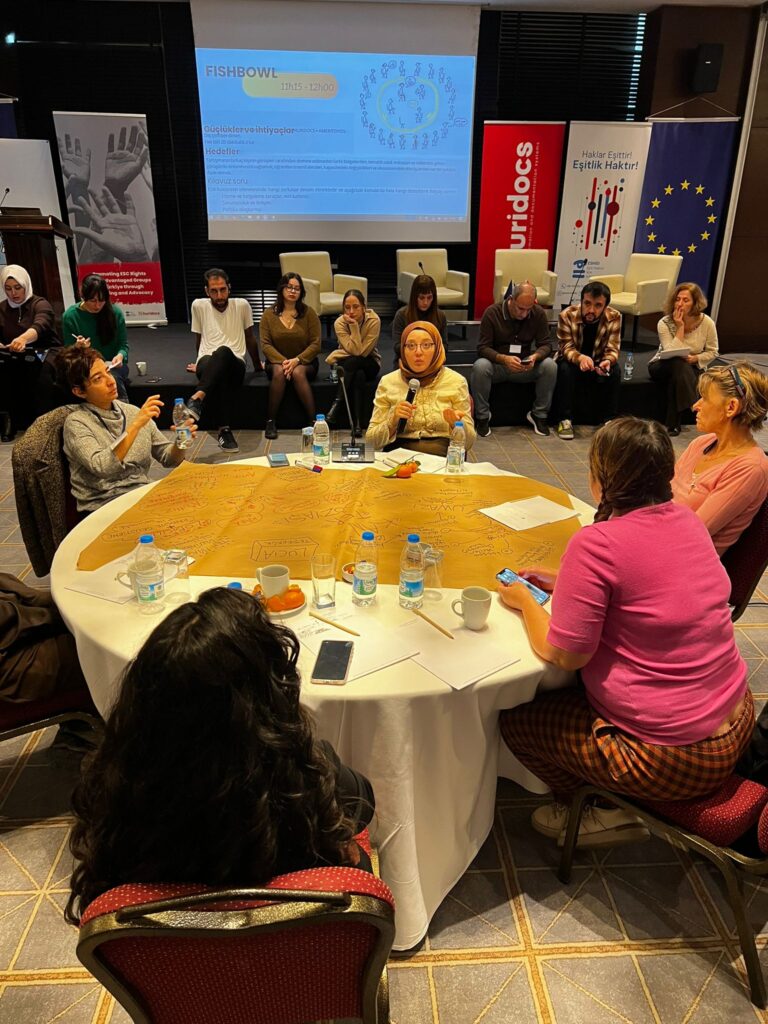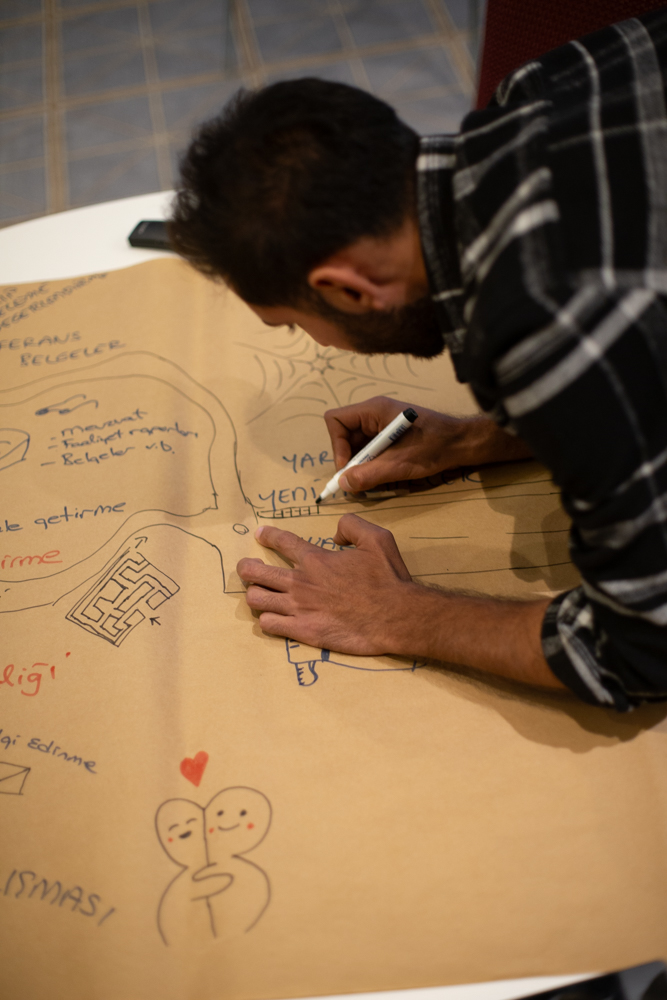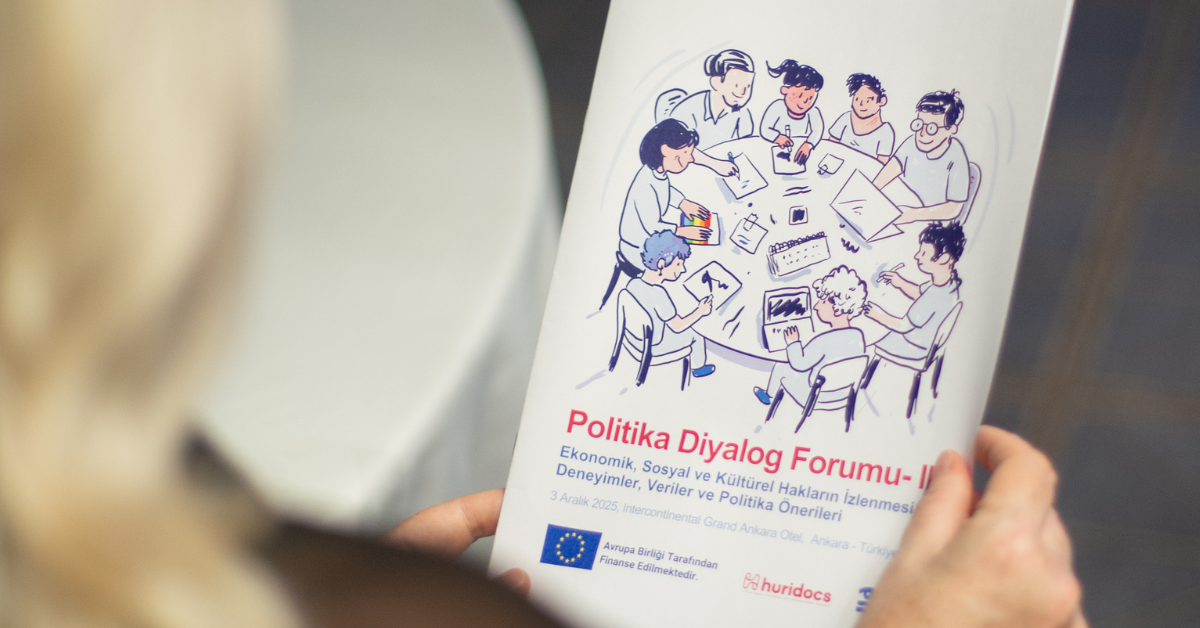
The 2nd Policy Dialogue Forum of the project funded by the European Commission, which focuses on the economic, social and cultural (ESC) rights of minorities in Türkiye, was held on 3 December 2025 in Ankara. The event brought together civil society organisations, policymakers, academics, unions, professional bodies, and public institutions and focused on the research produced in the second cycle of the project.
The Forum formed the first part of a two-day gathering organised with HURIDOCS and AMER. On the following day, partners continued their engagement in a closed Exchange of Experiences session, creating a space for reflection, learning and strengthening collaboration.
During the Forum, with approximately 100 attendees, the three subgrantees from the second cycle of the project (School of Human Rights, Hayat Sende Youth Academy and Youth Re-Autonomy Foundation of Turkey) showcased their Uwazi instances of their research projects, highlighting data-based findings and recommendations on inequalities linked to the right to work, discrimination in public service, and access to education for incarcerated children.
“The Policy Dialogue Forum was an opportunity for the Turkish civil organisations we have worked with to showcase their research to policymakers and the broader civil society. Participants chose to stay well beyond the scheduled time, continuing the discussions and valuing the space created for genuine exchange. It reinforced a shared commitment to advancing human rights in the country.”
—Seda Alp, AMER
Right to work, presented by School of Human Rights
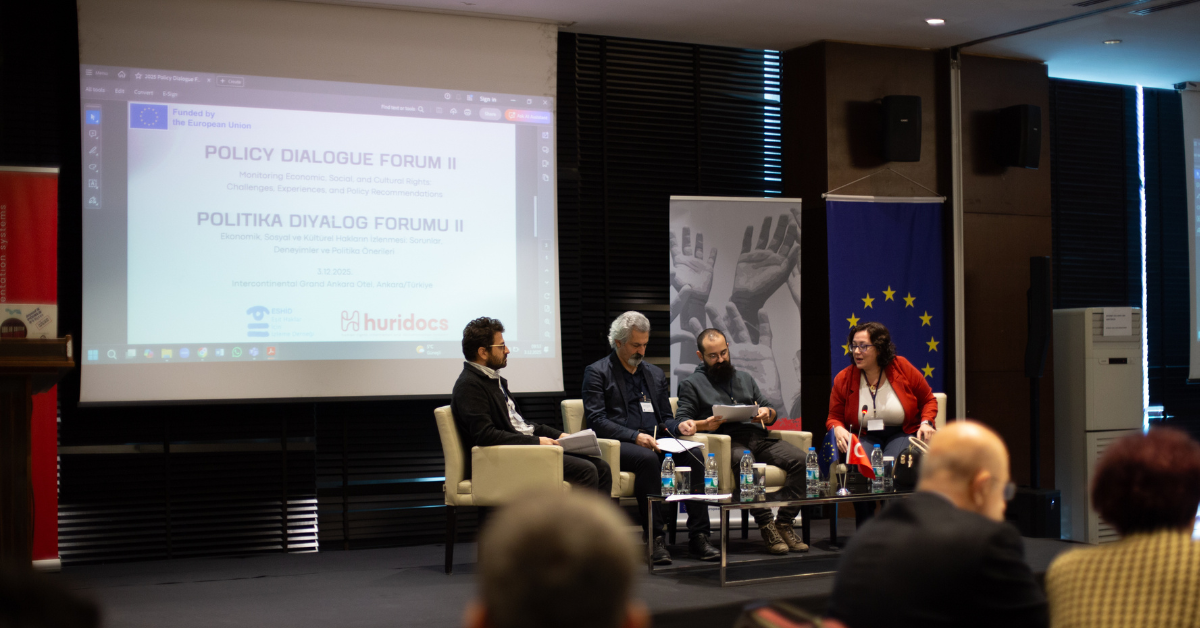
The School of Human Rights presented research approaching the right to work as a broad human right that extended beyond income security. The study examined freedom of organisation, collective bargaining, and the right to strike, showing how gender, disability, age, and ethnic origin shaped workers’ experiences. The findings pointed to persistent identity-based barriers in organisational processes and union representation.
“This was good for us, besides showing our findings for the last months, it gave us the motivation to keep working.”
—Elçin Aktoprak, The School of Human Rights
Discrimination in public institutions, presented by Hayat Sende Youth Academy
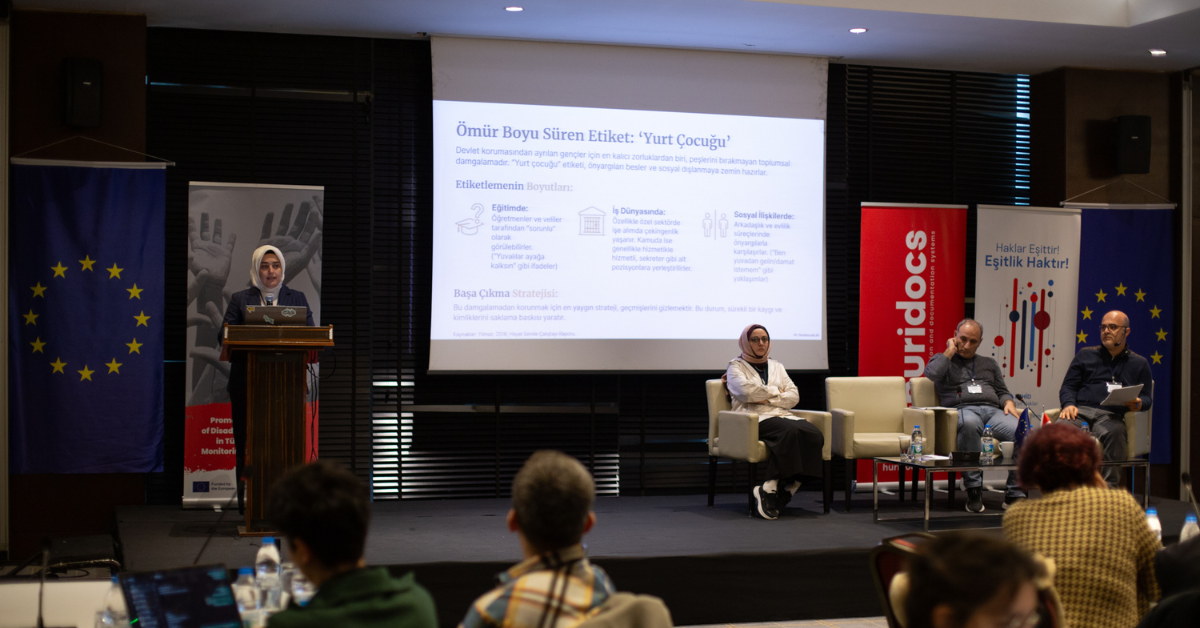
Hayat Sende Youth Academy shared its research on young adults aged 18–30 who had grown up under state protection and entered public service. The study documented the discriminatory practices many encountered, along with structural challenges that contributed to job insecurity or early exit from their appointed positions. The research revealed how intersectional disadvantages continued to affect their integration into the workforce.
“There were so many important figures from our civil society, and I am glad that they learned about our project. These kinds of events are essential because people get to hear about the findings and recommendations. During the Forum, there were even some useful pieces of advice from participants, so we were very happy.”
—Rumeysa Bozdemir, Hayat Sende
Right to education for incarcerated children, presented by Youth Re-Autonomy Foundation of Turkey
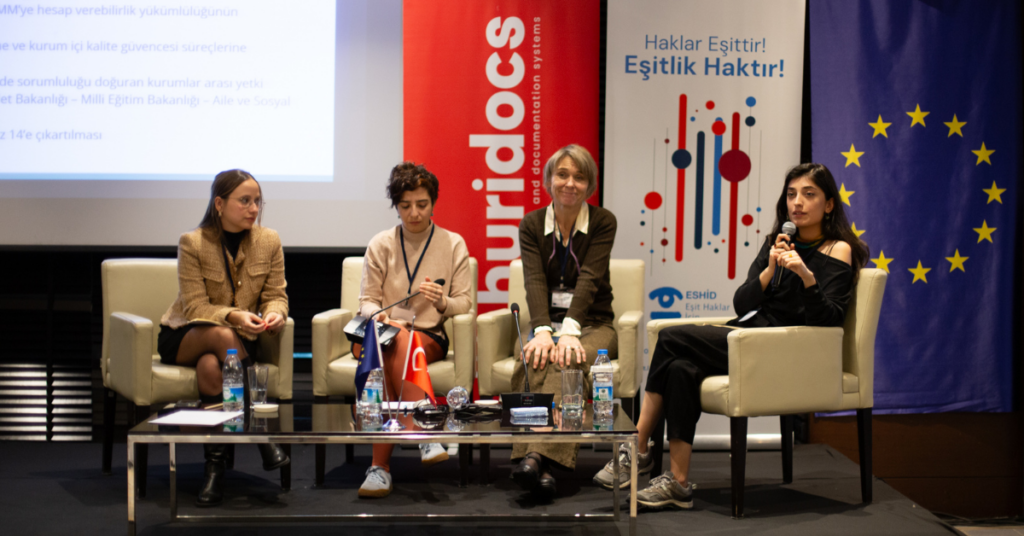
The Youth Re-Autonomy Foundation of Turkey presented its monitoring of educational access for children in the juvenile justice system. The research highlighted significant gaps in continuity of schooling, limited learning opportunities, and the consequences of interrupted education for one of the most vulnerable groups.
“Having these activities like the Policy Forum gives us the exposure and the opportunity to influence policies. In projects like this, it’s not only allocating a budget, but these activities can create a space for real collaboration among the wider civil society and policy makers.”
—Merve Merdane, Youth Re-Autonomy Foundation of Turkey
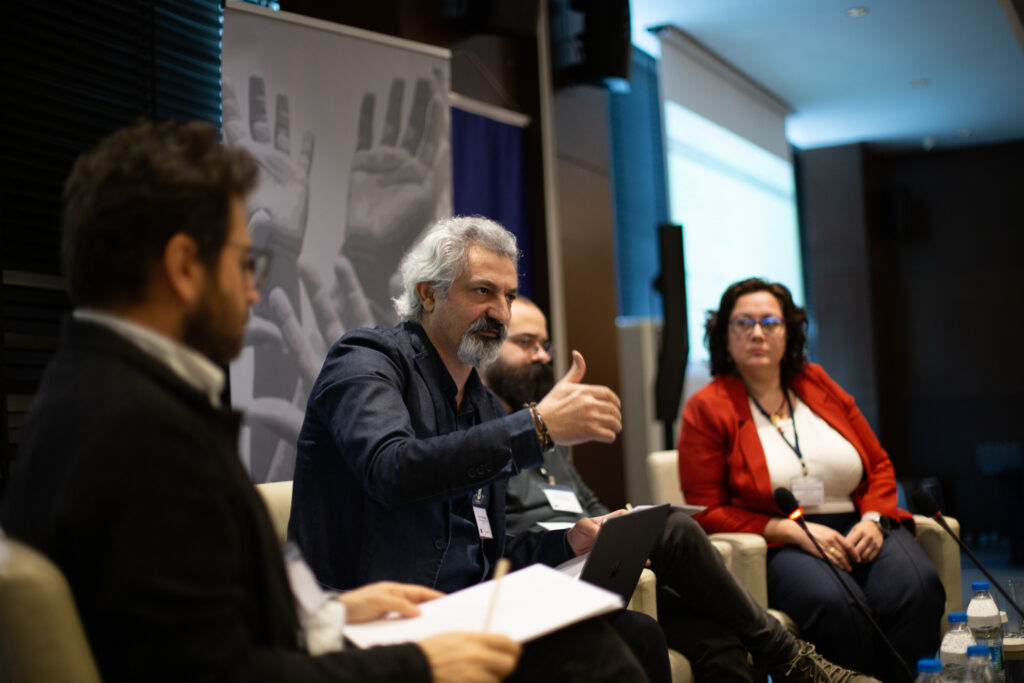
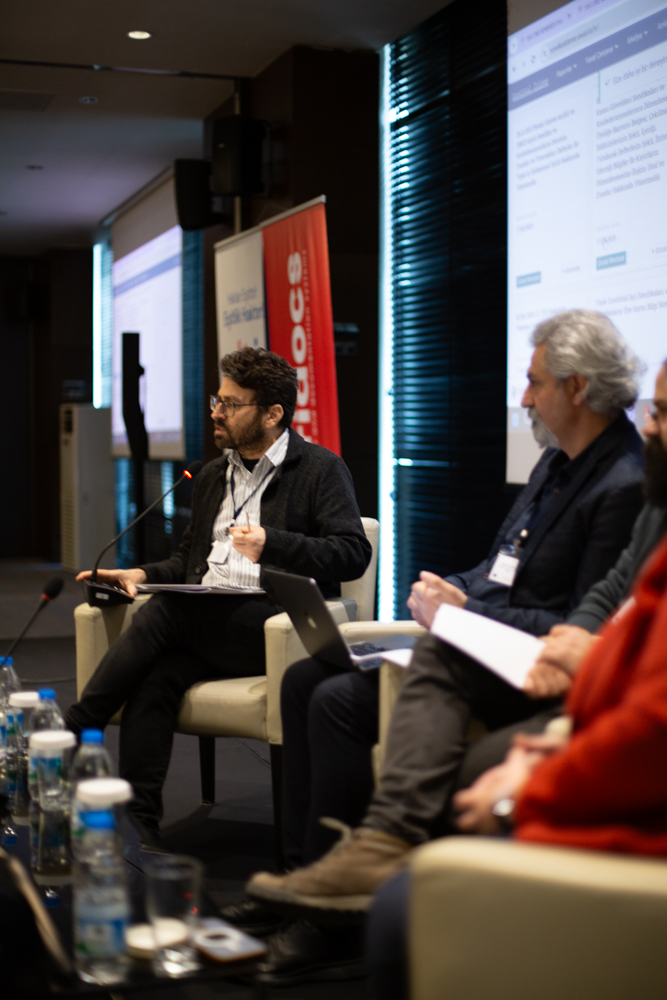
The Forum concluded with an open discussion session on the monitoring of economic, social, and cultural rights. Feray Salman (AMER Board member), Dr Christiaan Beyers (Canada Trent University), and Danna Ingleton (HURIDOCS’ Executive Director) shared insights on the importance of systematic monitoring as a tool for identifying structural gaps, strengthening accountability, and guiding rights-based policy development. Facilitated by Emel Kurma from Citizens Assembly, the open discussion underscored the need for consistent data, independent oversight, and cross-sector cooperation to ensure that human rights are effectively protected and advanced.
“Human rights are inherent, inalienable, and universal. They exist outside any treaty or law. Those instruments simply codify what is already ours. When human rights are attacked, ignored, or violated, that is precisely when we must document, even if it feels futile. We have to persist in recording our stories because when the moment for accountability comes, we will be ready. Our stories will stand as evidence. Justice will be ours.”
—Danna Ingleton, HURIDOCS Executive Director
Exchange of experiences
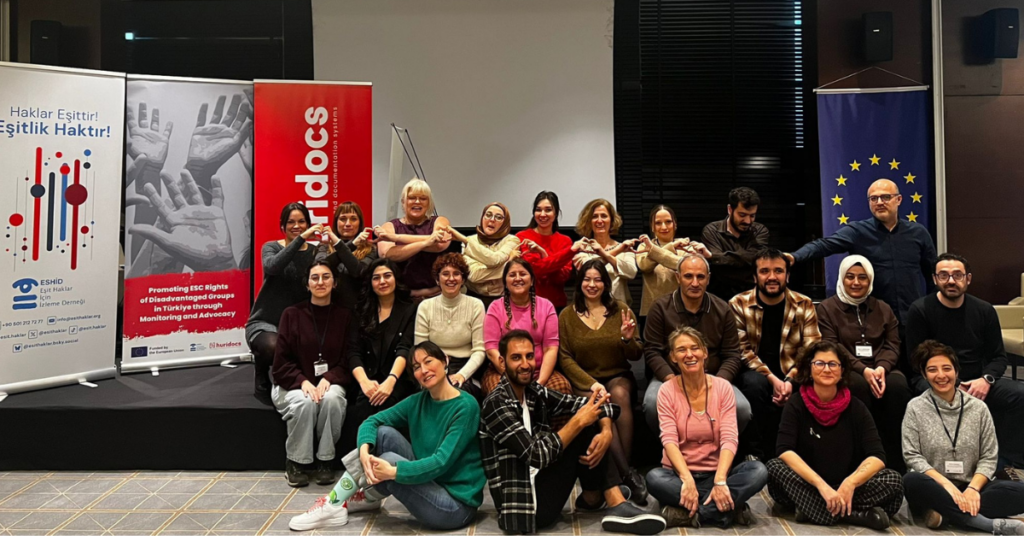
“You can’t stand alone if you want to work collectively.” Turkish proverb
The following day, AMER and HURIDOCS hosted a closed-door session with clusters from the first and second cycles of the project to exchange experiences and insights. The discussions further touched on sustainability and the need for more coordinated action among organisations. Several partners expressed that coming together more regularly would help amplify their work and make their resources more efficient. One participant highlighted: “We need to pay more attention to sustainability. I see commonalities in our activities, which means we are not using our budget efficiently or using our voice at the collective level. We need to consider how to amplify our work and, consequently, its impact.” (Merve Merdane, Youth Re-Autonomy Foundation of Turkey).
Others reflected on the learning process throughout the project, especially regarding documentation tools. Participants shared how gaining new skills in data organisation and visualisation influenced their work and opened possibilities for deeper analysis. One partner from the School of Human Rights shared: “We didn’t know much about the Uwazi platform at the beginning. Learning how to truly take advantage of it and seeing what data visualisation can do was transformative. It motivated us to work more on this topic.”
“Our session revealed three main threads. First, partners want to continue collaborating and sharing knowledge with one another. Second, from a documentation perspective, there is a strong need to work jointly on the tools and data they use. And finally, there was broad agreement on the importance of challenging harmful narratives in the current context, which can be addressed through policy forums, research and advocacy efforts.”
—Lucia Gomez, HURIDOCS Project Manager.
Next steps
Looking forward, the clusters will meet with policymakers to promote their findings, advance their advocacy plans, and develop data-based campaigns on their digital channels, while continuing to build and refine their Uwazi databases as a foundation for future work. They will also look for ways to develop joint activities and collaboration opportunities with one another, strengthening the connections formed throughout the project.
Hayat Sende will develop a training and mentoring programme for youth leaving state care, which will be presented to local authorities for their support, including access to venues and other resources. The Youth Re-Autonomy Foundation of Turkey aims to meet with policymakers to present their research findings and recommendations, continue uploading data on human rights violations in prisons to Uwazi in collaboration with bar associations, and launch data-based online campaigns. And the School of Human Rights will engage with policymakers and unions to promote their research while continuing to document on Uwazi violations of labour rights in the country.
As this two-year project comes to a close, AMER and HURIDOCS will host a follow-up event in March 2026, where the clusters will present their work to the broader international human rights community. This next gathering continues the project’s core purpose: to present data on the violations of economic, social, and cultural rights in Türkiye, create space for informed debate, and identify concrete pathways required to address them.
See photos of both events in our photo gallery below.