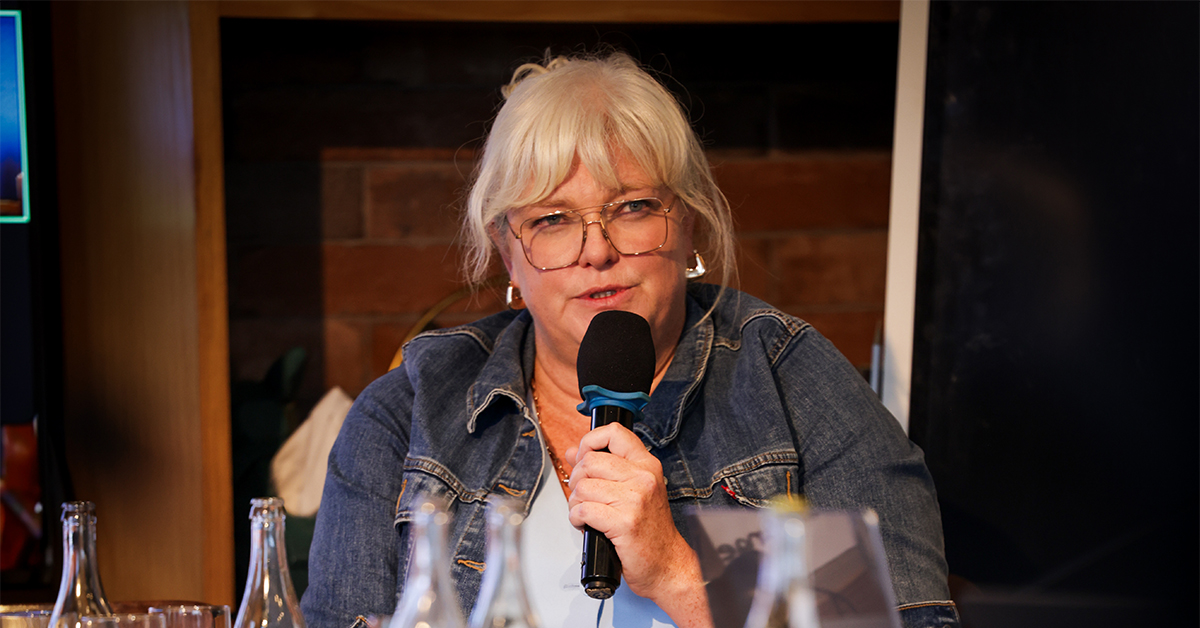
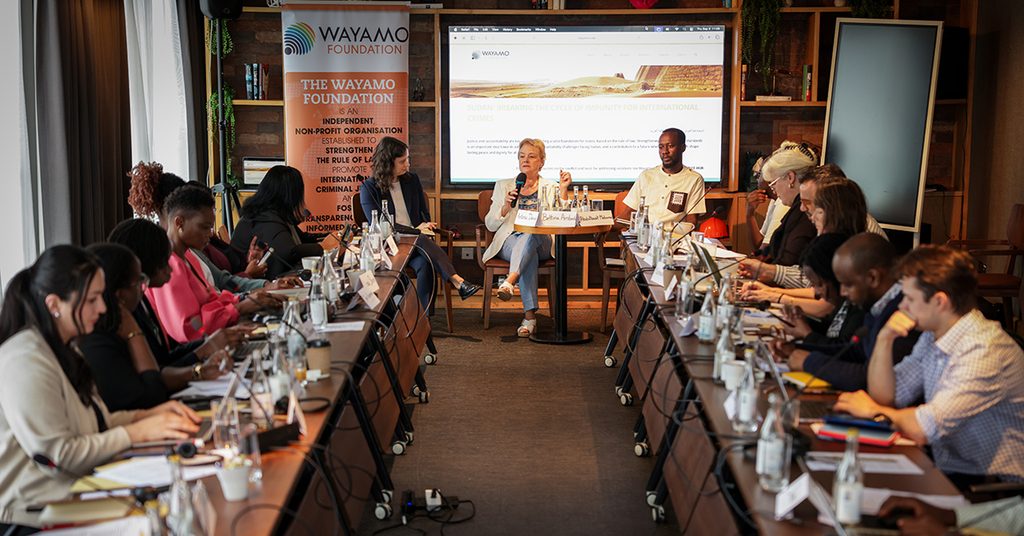
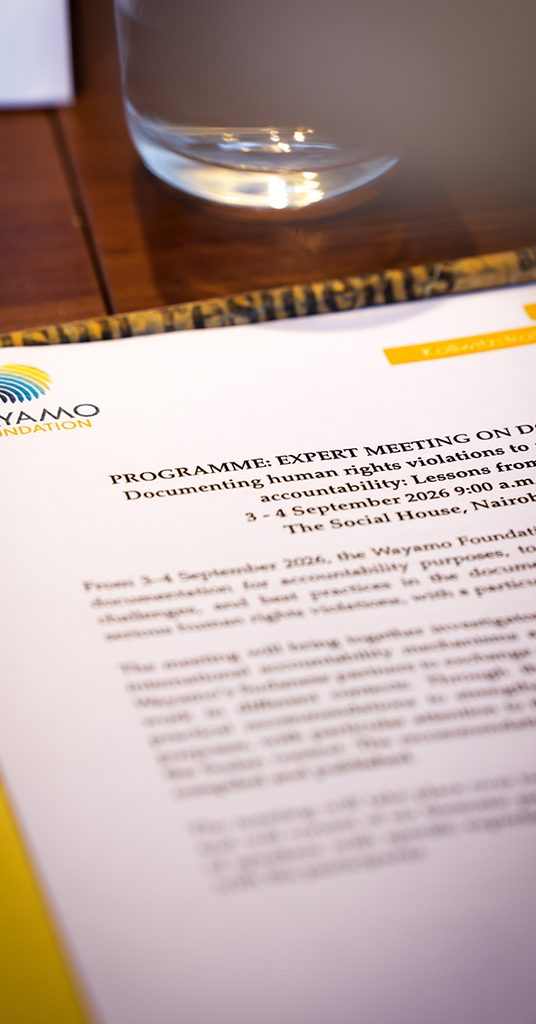
I recently travelled to Nairobi for a small expert meeting on documentation in Sudan, bringing together people working across documentation, technology, accountability and international justice.
The context for documenters working in Sudan is extraordinarily difficult: displacement, insecurity, intermittent connectivity, limited access to devices, and significant risks to themselves and the people whose experiences they are recording. We talked about gathering initial information without conducting a full witness interview; informed consent; maintaining contact with witnesses; security and connectivity; and how information moves from documenters to researchers and potentially onwards to prosecutors.
Many of these are questions the human rights movement has grappled with for decades. But that does not mean the answers are the same.
One thing is clear. The people doing this work in and around Sudan have a vast amount of accumulated knowledge: how people communicate, how trust is built, what risks witnesses and documenters face, which technologies people can actually access, and what is possible when displacement, insecurity and connectivity are constantly changing.
At the same time, there is a wider body of experience to draw on. Across HURIDOCS and the broader human rights movement, people have spent decades developing methodologies, standards and practices around many of these same questions.
The challenge is not simply to transfer established “best practice” into a new context. It is to create a conversation between what has been learned before and what documenters are learning now; identifying what remains useful, what needs to be adapted, and what Sudan requires us to rethink altogether.
When the destination is accountability
There is another piece of this when documentation may eventually contribute to criminal accountability.
If the intended pathway includes the International Criminal Court (ICC) or domestic jurisdictions pursuing international crimes, documenters need to understand what those mechanisms will ultimately require of the information they collect.
That does not mean that documentation should be designed entirely around the needs of prosecutors. Human rights documentation serves many purposes. But where accountability is one intended outcome, we need to ensure that choices about how information is collected, preserved and managed do not inadvertently close that pathway.
The stakes are high. People take enormous risks to document violations and witnesses trust organisations with extraordinarily sensitive information. The worst outcome would be to discover years later that information that could have contributed to accountability cannot be used because a foreseeable evidentiary standard or chain-of-custody requirement was not fully met.
That makes greater dialogue between civil society documenters and accountability mechanisms particularly important. What guidance can institutions like the ICC provide early enough to shape documentation practices? And what do those institutions need to learn from documenters about what is realistically possible in the environments where information is being collected?
This needs to work in both directions: accumulated human rights practice, the expertise of documenters working in conflict zones, and the requirements of accountability mechanisms all need to inform one another.
The persistent question of interoperability
That leads to another issue that kept surfacing in Nairobi: interoperability.
Documentation for accountability rarely sits neatly within one organisation or system.
Open-source investigations may need to be combined with witness testimony, closed-source research, photographs and videos, legal analysis, satellite imagery and other forms of evidence all held by different organisations using different tools, methodologies, vocabularies and data structures.
How do those pieces eventually come together while preserving their provenance and context?
How can information move between civil society organisations, researchers, investigators and accountability mechanisms without requiring everyone to use the same tool?
This is why I increasingly think of interoperability not simply as a technical feature, but as part of the infrastructure of human rights work.
The goal is not to have one enormous system that everyone has to use. Different organisations have different needs, risks, expertise and resources.
However, the choices we make about how information is structured and stored today affect whether it can connect with other information tomorrow.
So, can technology help?
Of course it can.
Technology can help documenters collect information offline and securely, preserve provenance, structure and analyse information, and connect information held across different systems. Increasingly, it may also help people navigate accumulated knowledge and find relevant methodologies, standards and experience when they need them.
But technology itself has a cost.
Every new tool takes time to learn. It requires training, devices, connectivity and maintenance. It changes workflows, can create dependencies on vendors or infrastructure, and in high-risk environments may introduce new security considerations.
So the question cannot simply be: What technology could solve this?
It has to be: Is the cost of introducing this technology worth what it enables?
Sometimes the answer will absolutely be yes. Sometimes the better intervention will be a clearer methodology, a better workflow, more accessible knowledge, or a stronger connection between the people collecting information and the institutions that may eventually use it.
Technology should help translate good documentation practices into workflows that reflect the real conditions people are facing, and those workflows should therefore be shaped by the people using them.
Building continuity
I came away from Nairobi thinking that one of the challenges we need to pay more attention to is not invention, or everyone’s favourite word “innovation”, but rather continuity.
Not continuity as simply preserving old methodologies and handing them to the next group of documenters. Rather, creating ways for different forms of knowledge to meet: what the human rights movement has learned, what people documenting violations now know about their own context, and what institutions that may ultimately rely on that information require.
Technology can help connect those things. But it is a means, not the objective.
“Ultimately, our job is to help ensure that information and evidence get where they need to go, in a form that makes them as useful, effective and enduring as possible.”
— Danna Ingleton, Executive Director, HURIDOCS
We must never forget that behind every piece of information are human lives: people taking enormous risks to collect it, people trusting documenters with their experiences, and people hoping that one day it might contribute to truth, justice or accountability.
What we build, the methodologies, relationships, standards and technologies alike, should honour and sustain that trust.